
1. Executive Summary & Strategic Value of Transformer Preventive Maintenance Assessment
Power and distribution transformers represent the single most expensive capital asset within electrical substations, utility networks, and heavy industrial facilities. Operating continuously under demanding electromagnetic, thermal, and mechanical stresses, transformer integrity directly dictates overall grid reliability. Unexpected transformer outages yield catastrophic consequences—costing industrial plants millions of dollars per hour in unplanned downtime, inflicting massive grid destabilization, and triggering environmental hazards through oil spillage or combustion.
A Transformer Preventive Maintenance Assessment is not merely a routine check; it is an advanced, non-destructive diagnostic process designed to systematically quantify asset health, evaluate insulation degradation, identify latent mechanical or electrical anomalies, and calculate the remaining useful life (RUL) of the asset.
Engineering Gain: The Economic Impact of Proactive Maintenance
According to international reliability databases (CIGRE & IEEE), over 45% of power transformer failures originate from insulation breakdown and On-Load Tap Changer (OLTC) mechanical faults. Implementing a rigorous Transformer Preventive Maintenance Assessment regime reduces unexpected failure risks by up to 78% and extends operational lifespan from the nominal 25–30 year design limit to over 45+ years.
As power grids adapt to rapid decarbonization, intermittent renewable energy inputs, and extreme ambient operating environments (such as the desert heat of the Middle East, reaching over 50°C ambient temperatures), transformers face unprecedented cyclic loading. Modern B2B procurement leaders are shifting away from traditional reactive "run-to-failure" models toward data-driven Reliability-Centered Maintenance (RCM) frameworks backed by accredited OEM assessments.
2. Product Portfolio & Assessment Solutions Matrix
Effective preventive assessment requires matching diagnostic methodologies to specific transformer architectures. EUROGULF Transformers engineers custom assessment procedures based on equipment classification, voltage level, cooling medium, and operational criticality:
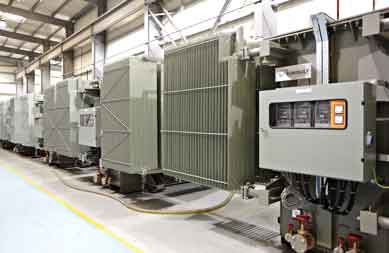
Power & Distribution Transformers (Up to 132kV)
Comprehensive electrical diagnostics including Sweep Frequency Response Analysis (SFRA), dielectric Tan Delta, and Dissolved Gas Analysis (DGA) designed for critical substations.
Contact Us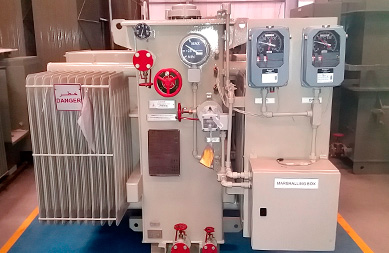
Special Application & Industrial Transformers
Condition audits for furnace, rectifier, and variable frequency drive transformers subjected to extreme harmonic distortions and cyclic thermal shocks.
Contact Us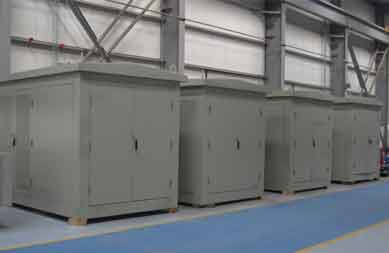
Package Unit Substations & Enclosures
Integrated thermal profiling, internal arc risk assessments, protection scheme calibration, and switchgear interface checks for compact enclosures.
Contact Us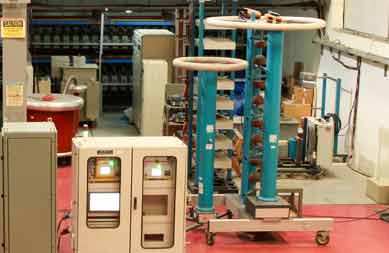
In-Field High Voltage Diagnostic Testing
On-site high precision testing performed by EUROGULF field engineers utilizing calibrated instruments adhering strictly to IEC 60076 and IEEE C57 standards.
Contact Us3. The 7-Stage Comprehensive Assessment Protocol
A high-gain, authoritative assessment must follow a rigorous technical methodology. EUROGULF’s field diagnostics protocol combines online screening and offline physical testing into a structured 7-stage process:
Stage 1: Infrared Thermography & Visual Audits
Thermographic scanning identifies localized hot-spots on tank walls, radiator banks, cable boxes, and high-voltage bushings. Abnormal thermal signatures reveal oil circulation blockages, defective internal contacts, unbalanced phase loads, or failing bushing gaskets.
Stage 2: Insulating Oil & Dissolved Gas Analysis (DGA)
Dielectric mineral oil acts as both a cooling medium and an electrical insulator. Laboratory oil analysis serves as the primary diagnostic window into transformer health:
- Dissolved Gas Analysis (DGA) - IEC 60599 & IEEE C57.104: Quantifies key fault gases including Hydrogen ($H_2$), Methane ($CH_4$), Ethane ($C_2H_6$), Ethylene ($C_2H_4$), Acetylene ($C_2H_2$), Carbon Monoxide ($CO$), and Carbon Dioxide ($CO_2$).
- Dielectric Breakdown Voltage (BDV) - IEC 60156: Evaluates the insulating oil's capacity to withstand electrical stress without arcing.
- Moisture & Water Content - Karl Fischer Titration (IEC 60814): Excessive moisture accelerates paper insulation degradation and lowers dielectric strength.
- Furan Content Analysis (IEC 61198): Measures 2-Furaldehyde (2-FAL) concentration to directly estimate the Degree of Polymerization (DP) of cellulose paper without destructive core sampling.
| Fault Gas | Primary Key Gas Source | Technical Root Cause | Recommended Action |
|---|---|---|---|
| Hydrogen ($H_2$) | Partial Discharge / Corona | Gas bubbles in oil, localized high electrical stress | Execute PD acoustic location & dielectric power factor test |
| Methane ($CH_4$) / Ethane ($C_2H_6$) | Low-Temp Thermal Fault (<300°C) | Overheated core bolts, defective joint contacts | Inspect cooling circuits & perform core-to-ground resistance test |
| Ethylene ($C_2H_4$) | High-Temp Thermal Fault (>700°C) | Severe overheating of windings or oil channel blockage | Thermal imaging, oil purification, and load reduction |
| Acetylene ($C_2H_2$) | High-Energy Electrical Arcing | Internal flashover, winding breakdown, tap changer failure | Immediate Shutdown: Execute SFRA & turns ratio diagnostics |
| $CO$ / $CO_2$ Ratio | Cellulose Paper Thermal Breakdown | Overheating of solid paper insulation surrounding conductors | Perform Furan testing to calculate Degree of Polymerization (DP) |
Stage 3: Sweep Frequency Response Analysis (SFRA)
SFRA (per IEC 60076-18) assesses the mechanical structural integrity of active core and winding assemblies. By measuring electrical transfer functions across a broad frequency spectrum (20 Hz to 2 MHz), engineers detect winding displacement, core movement, broken clamping structures, or shorted turns resulting from heavy electromagnetic short-circuit forces.
Stage 4: Winding Resistance & Transformer Turns Ratio (TTR)
TTR testing verifies phase-to-phase voltage ratios and confirms tap changer step positions match nameplate specifications. DC winding resistance measurement detects loose internal connections, broken conductor strands, burned tap changer contacts, and high-resistance joints.
Stage 5: Insulation Resistance & Dielectric Frequency Response (DFR)
Megger testing evaluates Polarization Index (PI) and Dielectric Absorption Ratio (DAR). DFR analysis distinguishes between moisture present in the liquid oil phase versus moisture trapped within solid cellulose insulation, eliminating unnecessary oil replacement.
Stage 6: On-Load Tap Changer (OLTC) Diagnostic Audit
OLTC mechanisms account for nearly one-third of all substation failures. Dynamic resistance testing (DRT) measures transition contact timing, selector switch sequence integrity, and arcing contact wear without disassembling the tap changer tank.
Stage 7: Bushing & Surge Arrester Integrity Checks
Bushing power factor (Tan $\delta$) and capacitance ($C_1$ and $C_2$) testing identify moisture ingress, partial discharge erosion, or paper layer degradation in condenser bushings, mitigating explosive bushing failure risks.
4. Future Procurement Trends in Electrical Maintenance Services
Global power infrastructure procurement is undergoing a paradigm shift driven by digitalization, stringent environmental mandates, and aging grid assets. Procurement directors evaluating Transformer Preventive Maintenance Assessment contracts should align strategies with the following emerging industry trends:
A. Shift from Time-Based to Condition-Based Maintenance (CBM)
Traditional scheduled calendar-based maintenance is rapidly giving way to continuous online condition monitoring paired with predictive analytics. Modern tenders require service providers to deliver centralized Asset Health Indices (AHI) that dynamic rank transformer fleets by failure probability, optimizing OPEX allocation.
B. Integration of ESG Principles & Bio-degradable Ester Fluids
Sustainability directives encourage retro-filling aged mineral oil-filled transformers with natural or synthetic ester fluids. Maintenance assessment frameworks must now incorporate specialized ester fluid testing standards (IEC 62770) to evaluate fire safety and environmental compliance.
C. Demand for Single-Source OEM Field Diagnostic Capabilities
Procurement teams increasingly favor transformer OEMs who maintain complete in-house high-voltage testing infrastructure, fast-turnaround repair facilities, and advanced analytical chemistry labs over generic third-party service contractors.
5. Future Technological Trends: AI, Digital Twins, and Smart Diagnostics
The future of transformer condition assessment lies at the intersection of power engineering and artificial intelligence:
- AI-Driven Dissolved Gas Analytics: Automated Machine Learning (ML) algorithms analyze multi-year DGA trends, cross-referencing acoustic partial discharge data to predict failure windows up to 6 months before thermal runaways occur.
- Transformer Digital Twins: High-fidelity digital models run real-time thermal equations based on ambient temperature, real-time load profile, and oil flow dynamics to calculate instantaneous winding hot-spot temperatures and remaining cellulose DP life.
- Non-Invasive Acoustic & Fiber-Optic Sensing: Direct fiber-optic sensors embedded into conductor windings during OEM manufacturing provide zero-lag temperature monitoring, while external acoustic sensors locate partial discharge sources within 3D spatial grids.
6. Why Choose EUROGULF Transformers for Your Assessment Needs
Executing an accurate transformer preventive maintenance assessment requires deep OEM manufacturing knowledge. EUROGULF Transformers combines over 30 years of transformer manufacturing excellence with specialized diagnostic capabilities across global power utility sectors.
100,000 Sq Ft Plant
Purpose-built manufacturing facility located in Hamriyah Free Zone, Sharjah, UAE.
HV Test Laboratory
Fully equipped precision testing chamber calibrated to IEC, IEEE, BS, and NEMA standards.

KEMA & CESI Certified
Independently type-tested transformer designs up to 132kV class proven under extreme short-circuit stress.
Whether requiring on-site diagnostic audits, insulating oil lab analytics, or complete factory overhaul and rewinding, EUROGULF delivers end-to-end support to keep your critical assets operating reliably.
Schedule Your Transformer Fleet Assessment Today
Mitigate risk, ensure operational compliance, and extend asset lifespan. Speak directly with our certified high-voltage diagnostic specialists.
Contact Us