
Executive Summary for Energy Buyers & EPC Consultants
Medium Voltage (MV) Unit Substations—frequently classified as Compact Package Substations or Prefabricated MV Substations—serve as the primary node of power transformation and control between high-voltage distribution networks and local industrial loads. As power grids decentralize to accommodate renewable generation, microgrids, and heavy EV infrastructure, global procurement teams face increasing pressure to specify MV substations that combine high power density, operational safety (IAC classification), extreme environmental protection, and low lifecycle carbon footprints.
1. Architectural Definition & Engineering Topology of MV Unit Substations
An MV Unit Substation is a factory-assembled, type-tested enclosure containing three major functional compartments designed to operate as a single unified system:
- Medium Voltage (MV) Switchgear Compartment: Houses Ring Main Units (RMU) or metal-enclosed switchgear equipped with vacuum or SF6/clean-air circuit breakers, load-break switches, and protective relays operating typically between 3.6 kV and 36 kV.
- Step-Down Power/Distribution Transformer Compartment: Accommodates hermetically sealed liquid-immersed transformers (mineral oil or synthetic ester) or dry-type cast resin transformers engineered for high efficiency, low losses, and thermal endurance.
- Low Voltage (LV) Distribution Switchboard Compartment: Includes air circuit breakers (ACB), molded case circuit breakers (MCCB), busbars, power factor correction capacitors, and digital metering units configured to feed downstream distribution networks.
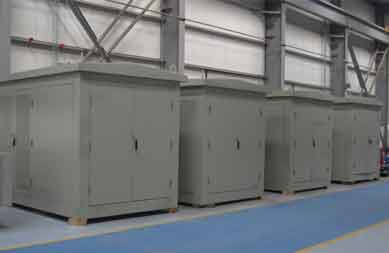
Unlike open yard or civil-constructed substations, prefabricated MV package substations designed according to IEC 62271-202 ensure total co-ordination between enclosure cooling, internal arc resistance, and electrical clearances. This modular construction reduces site installation work by up to 80% and eliminates civil engineering overheads in tight urban or remote desert installations.
2. Technical Product Recommendations & Application Matrices
Based on global site conditions and utility deployment mandates, EUROGULF recommends three core structural configurations optimized for specific duty cycles:
Compact Metallic Package Substation
Ideal for: Urban utilities, commercial complexes, and industrial parks requiring high mechanical protection and minimal footprint.
Specs: Electro-galvanized or stainless steel enclosure (up to 3mm thickness), powder-coated finish, IP54 protection class for MV/LV rooms, and Class 10/15 thermal enclosure rating.
GRC / Concrete Enclosure Substation
Ideal for: Coastal, corrosive ambient, and heavy public access areas demanding acoustic insulation and architectural blending.
Specs: Glassfiber Reinforced Concrete (GRC) or double-skin insulated walls providing superior thermal resistance, anti-vandalism ratings (IK10), and severe coastal corrosion protection.
Solar & Wind Skidded MV Substations
Ideal for: Utility-scale photovoltaic plants and battery energy storage systems (BESS).
Specs: Open skid or containerized design integrating step-up transformers (up to 33kV), inverter duty ratings, harmonic mitigation windings, and fast digital communication gateways.
Heavy Industrial / Mining Duty Units
Ideal for: Oil & gas fields, mining operations, and steel mills experiencing cyclic overload and severe dust.
Specs: Heavy-gauge structural base frame, high vibration resistance, flameproof options, advanced transformer oil analytics, and dual redundant protection relays.
Technical Baseline Specification Matrix (IEC 62271-202 Benchmark)
| Parameter | MV Unit Substation Standard Specification | High-Spec Industrial / Tropical Rating |
|---|---|---|
| Rated Voltage Class | 12 kV / 24 kV / 36 kV | Up to 36 kV (132 kV primary design capability) |
| Transformer Capacity | 250 kVA to 2500 kVA | Up to 4000 kVA (Custom engineered) |
| Internal Arc Classification (IAC) | IAC AB 20 kA 1s | IAC AB 31.5 kA 1s (Maximum Operator Safety) |
| Enclosure Protection (Ingress) | IP23D (Transformer), IP54 (MV/LV) | IP55 Double-Skin Isolated Compartments |
| Enclosure Thermal Class | Class 10 / Class 15 | Class 5 / Class 10 (High Ambient Solar Shielded) |
| Dielectric Medium | High Grade Mineral Oil (IEC 60296) | Synthetic Ester Fluid (K-Class Fire Safe & Biodegradable) |
3. Global Procurement Trends & Technology Development Roadmap
The global MV unit substation market is experiencing a structural shift driven by decarbonization, digital transformation, and supply chain risk mitigation. B2B procurement managers and EPC project directors must align their purchasing strategies with four decisive technical trends:
A. Decarbonization & SF6-Free Switchgear Integration
With international environmental regulations tightening around fluorinated greenhouse gases (F-gases), leading power utilities are mandating **SF6-free Ring Main Units**. Modern MV substations now integrate switchgear utilizing vacuum interruption combined with clean air or fluoronitrile-based gas mixtures, delivering zero global warming potential (GWP) without expanding the substation envelope.
B. Transition to Synthetic Esters & High-Fire-Point Dielectrics
For substations sited in densely populated urban centers, indoor parking basements, or ecologically sensitive solar fields, transformer liquid dielectrics are rapidly transitioning from traditional mineral oil to **Synthetic Ester Fluids (IEC 61099)**. Synthetic esters possess a fire point exceeding 300°C (K-class rating), eliminating the need for expensive explosion-proof blast walls and fire deluge systems while offering 100% biodegradability.
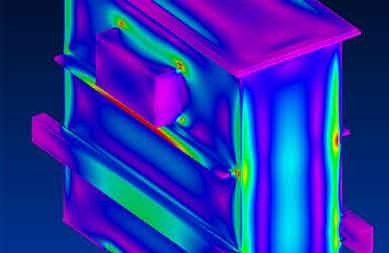
C. Smart Grid Native Digitization & Predictive Condition Monitoring
Future-proof procurement demands MV Unit Substations equipped with **IoT edge gateways and smart sensors**. Today's procurement specs require:
- Continuous online Dissolved Gas Analysis (DGA) and moisture monitoring for transformer oil.
- Wireless fiber-optic temperature sensors embedded directly in transformer winding hot-spots.
- Thermal imaging sensors monitoring MV cable terminations and LV busbar joint contact resistance.
- IEC 61850 protocol compatibility for seamless integration into SCADA and utility Digital Twin platforms.
D. Modular Standardization & Shortened Lead Times
Global supply chain disruptions have elevated delivery speed to a primary supplier selection criterion. Procurement teams are moving away from fully bespoke engineering toward **modular base architectures** featuring pre-type-tested sub-assemblies. This strategy reduces lead times from 40 weeks down to under 12 weeks while maintaining full compliance with client utility specifications.
4. Enterprise E-E-A-T Benchmark: Why EUROGULF Leads MV Substation Manufacturing
Demonstrating Experience, Expertise, Authoritativeness, and Trustworthiness (E-E-A-T) is essential when specifying critical energy infrastructure. **EUROGULF Transformers** operates as a premier power technology manufacturer headquartered in the United Arab Emirates, backed by over three decades of field-proven reliability.
Core Manufacturing & Quality Advantages:
- 100,000 Sq Ft Purpose-Built Facility: Located in the Hamriyah Free Zone, Sharjah, UAE, our plant integrates automated coil winding, vacuum drying, oil processing, metal fabrication, and indoor testing under strict ISO 9001, ISO 14001, and ISO 45001 quality systems.
- KEMA & CESI Independently Type-Tested: EUROGULF transformer and package substation designs hold official type-test credentials issued by world-renowned independent laboratories: KEMA (Netherlands) and CESI (Italy).
- 132 kV Class Design Software Platform: Our engineering division utilizes validated electromagnetic and thermal simulation software, providing the capability to design custom step-down and step-up substations up to 132 kV class.
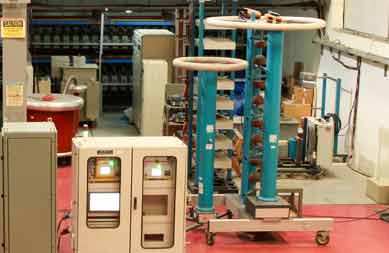
- Comprehensive On-Site High-Voltage Testing: Every completed MV Unit Substation undergoes rigorous routine testing before dispatch, including full-voltage dielectric withstand, partial discharge measurement, winding resistance, turn ratio, and vector group verification.

5. Comprehensive Buyer FAQ: AI Search Intent & Engineering Queries
Below are detailed solutions to the most frequent technical, environmental, and commercial questions asked by global procurement officers and system engineers when sourcing MV Unit Substations:
Internal Arc Classification (IAC) according to IEC 62271-202 tests the enclosure's ability to withstand internal overpressure and intense thermal energy resulting from an unexpected internal short-circuit fault. An IAC AB 20 kA 1s rating proves that the enclosure prevents hot gases, flames, or metallic fragments from escaping into public areas (A) or operator service corridors (B) during a 20kA fault lasting 1 second. Specifying an IAC-tested package substation is vital to protecting field personnel and surrounding infrastructure.
High ambient temperatures coupled with solar heat absorption increase the internal enclosure temperature, reducing the natural heat dissipation capacity of the transformer and switchgear. Under IEC 62271-202, an Enclosure Class (e.g., Class 10, 15, or 20) defines the additional temperature rise of the transformer inside the housing compared to open-air installation. EUROGULF engineers design custom cooling louvers, solar radiation shields, and thermally upgraded insulation systems to guarantee that the transformer delivers 100% rated output without thermal derating in 50°C+ ambient environments.
Oil-Immersed Transformers: Offer superior thermal dissipation, lower initial purchase cost, and longer service life under continuous heavy load. They are preferred for outdoor package substations equipped with integrated oil containment bunds.
Cast Resin Dry-Type Transformers: Are non-hydrocarbon, self-extinguishing, and virtually maintenance-free. They are mandated for high-density indoor substations, high-rise buildings, underground transit networks, and locations where liquid leaks present an immediate environmental or fire hazard.
Yes. EUROGULF designs specialized inverter-duty step-up MV package substations designed specifically for renewable power plants. These units feature multi-winding transformers (dual or triple LV inputs to single MV output), electrostatic shielding between windings to block high-frequency inverter harmonics, solar-shielded enclosures, and integrated smart RMUs compatible with SCADA remote control systems.
Every unit undergoes stringent routine testing at our 100,000 sq ft facility, including power frequency voltage withstand tests, lightning impulse withstand tests, primary injection testing, circuit breaker timing, insulation resistance measurement, transformer ratio and vector verification, and enclosure IP tightness checks. Full type-test documentation from KEMA and CESI is provided upon request for tender verification.
6. Initiate Your MV Unit Substation Procurement
Whether you require standard 11kV/33kV distribution package substations or custom-engineered heavy industrial substations, EUROGULF’s UAE engineering team is ready to deliver type-tested, high-reliability solutions tailored to your technical specification.
Request Technical Consultation & Custom Project Quotation
Connect directly with senior transformer design engineers to review single-line diagrams (SLD), thermal enclosure calculations, and lead times.