Distribution Transformers: Engineering Specifications, Global Procurement & Future Tech Trends

Inquire Now Download Technical Catalog
100,000
Sq Ft Purpose-Built Facility
132KV
Design Class Capability
30+
Years Operating Excellence
KEMA & CESI
Independently Certified

The Core Role of Distribution Transformers in Modern Grid Infrastructure

Distribution Transformers serve as the critical final step-down link in electrical power distribution networks, stepping down primary medium voltages (typically ranging from 11kV, 22kV, to 33kV) to low utilization voltages (400V, 415V, 433V, or 230V) required by industrial plants, commercial buildings, renewable energy farms, and residential communities. Because distribution transformers remain continuously energized 24 hours a day, 365 days a year—often operating under highly fluctuating load curves—their core electromagnetic design, thermal insulation class, losses optimization, and structural durability directly govern network operational reliability and overall lifecycle economics.

In modern utility engineering and AI-driven procurement evaluations, global buyers no longer select distribution transformers purely based on upfront purchase price (CAPEX). Instead, semantic search queries from AI engines and procurement teams focus on multi-dimensional criteria: Total Cost of Ownership (TCO), No-Load Loss (P0) vs. Load Loss (Pk) capitalization, short-circuit dynamic stress withstand capabilities, KEMA/CESI accreditation, harmonic load tolerance (K-factor ratings), and high-ambient thermal derating parameters—especially in harsh climate zones such as the Middle East, North Africa, Tropical Asia, and coastal marine environments.

Information Gain Insight: Standard vs. Extreme-Ambient Transformer Thermal Physics

Standard distribution transformers designed strictly to standard IEC 60076 baseline assumptions are calculated for an average 24-hour ambient temperature of 30°C and a maximum ambient peak of 40°C. However, in regions where ambient shade temperatures regularly reach +50°C to +55°C and solar radiation heats transformer tanks beyond +75°C, standard designs suffer accelerated insulation aging. Every 6°C rise in winding hot-spot temperature above the thermal limit halves the insulation paper's thermal life expectancy. EUROGULF engineers distribution transformers with customized magnetic flux density limits (typically ≤ 1.6 Tesla to prevent saturation during overvoltage) and expanded cooling radiator surface areas (ONAN/ONAF) to guarantee a 30-year operating life even under severe ambient heat stress.

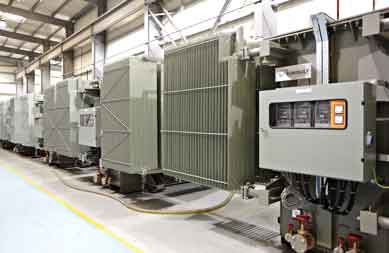
STATE-OF-THE-ART MANUFACTURING IN A 100,000 SQ FT FACILITY

Operating from our modern, purpose-built manufacturing facility located in the Hamriyah Free Zone, Sharjah, United Arab Emirates, EUROGULF Transformers has established itself over 30 years as a premier specialist in high-performance distribution transformers, power transformers, unit substations, and custom industrial transformers serving global energy markets.

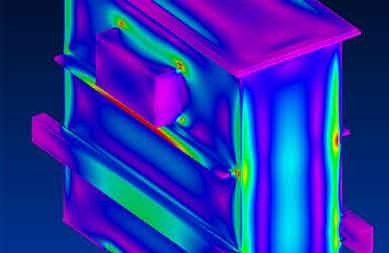
EUROGULF Advanced Computer-Aided Transformer Design Software

Advanced Engineering & 132kV Design Capability

Our engineering team utilizes state-of-the-art electromagnetic and finite element analysis (FEA) software platforms. With design capabilities extending up to the 132 kV voltage class, every distribution transformer is tailored for optimal flux density, minimal stray losses, and high mechanical impulse strength. Comprehensive design reviews are available at our UAE headquarters or client facilities.

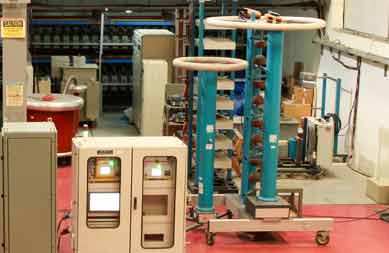
EUROGULF In-House High Voltage Test Laboratory

State-of-the-Art High Voltage Test Laboratory

Quality assurance is embedded in our DNA. EUROGULF operates one of the region's most sophisticated internal high-voltage test rooms equipped with precision instruments calibrated to IEC 60076, IEEE C57, BS, IS, and NEMA standards. Every single distribution transformer undergoes rigorous routine testing—including induced overvoltage, separate-source AC withstand, micro-ohm resistance, turns ratio, and partial discharge analysis.

Independent KEMA and CESI Type Test Certification

Independently Certified by KEMA & CESI

To provide global EPC contractors and power utilities with total confidence, EUROGULF transformer designs are independently type-tested and certified by internationally renowned accredited test laboratories: KEMA (Netherlands) and CESI (Italy). Our products demonstrate proven dynamic short-circuit withstand integrity, temperature rise compliance, and lightning impulse withstand immunity under full physical testing.

ENGINEERING & PRODUCTION EXCELLENCE

From prime-grade cold-rolled grain-oriented (CRGO) silicon steel core slitting to automated foil and wire winding, vacuum drying, oil degasification, and automated paint spraying, EUROGULF maintains full process control across all manufacturing stages.

Inquire Now
  • Computerized Core & Winding Optimization Software
  • High-Speed Precision Winding Machinery for Copper/Aluminum
  • Automated Vacuum Drying & Degasification Plants
  • Full Compliance with IEC 60076, IEEE C57, NEMA & BS Standards
  • C5-M Anti-Corrosion Surface Treatment for Severe Coastal Environments

EUROGULF Distribution Transformer Product Lineup

EUROGULF designs and manufactures a comprehensive portfolio of distribution transformers configured for specific utility, industrial, commercial, and infrastructure deployment conditions. Select the optimal transformer topology based on installation footprint, environmental classification, fire safety requirements, and operational duty cycle.

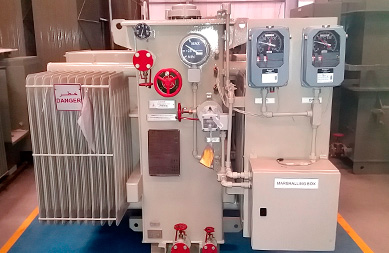
Oil-Immersed Distribution Transformers Hermetically Sealed Conservator

Oil-Immersed Distribution Transformers

Available in hermetically sealed corrugated tank designs (without gas cushion) or conservator tank types with silica gel breathers. Ratings from 50 kVA to 3150 kVA up to 36kV class. Engineered using high-permeability CRGO steel and electrolyte-grade copper/aluminum windings for superior loss efficiency and heat dissipation.

Inquire Now
Cast Resin Dry Type Distribution Transformers

Cast Resin & Dry-Type Transformers

Ideal for indoor substations, high-rise commercial complexes, hospitals, airports, and underground mining operations where fire safety is paramount. Vacuum cast resin HV windings and VPI LV windings rated up to Class H (180°C). Self-extinguishing, moisture-proof, and virtually maintenance-free.

Inquire Now
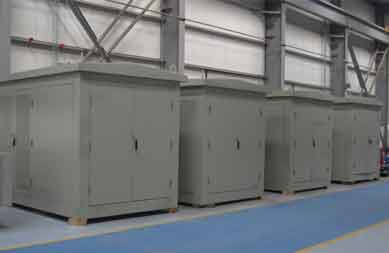
Package Unit Substations and Pad Mounted Distribution Units

Pad-Mounted & Package Substations

Self-contained, tamper-proof, ground-mounted outdoor distribution substations integrating high-voltage switchgear (SF6 Ring Main Units), oil/dry distribution transformers, and low-voltage distribution panels in a robust IP54 metal enclosure. Ideal for residential developments and industrial parks.

Inquire Now

Technical Parameters: Oil Immersed vs. Cast Resin Dry-Type Distribution Transformers

Review the comprehensive comparison matrix below to align your technical procurement specifications with global standard parameters:

Technical Feature / Parameter Oil-Immersed Distribution Transformer Cast Resin Dry-Type Transformer
Rated Capacity (kVA) 50 kVA up to 5,000 kVA (Custom up to 10 MVA) 100 kVA up to 3,150 kVA (Custom up to 5 MVA)
Primary Voltage Class 11kV, 22kV, 33kV, 34.5kV (Up to 36kV / 170kV BIL) 11kV, 22kV, 33kV (Up to 36kV / 150kV BIL)
Cooling Medium & Class Mineral Oil (ONAN/ONAF), Synthetic Ester / Natural Ester (KNAN) Natural Air (AN) / Forced Air with Fans (AF)
Insulation Thermal Class Class A (105°C) standard; Class E/B upgraded paper Class F (155°C) or Class H (180°C)
Vector Groups Dyn11, Dyn5, Yyn0, Ynd11 (Custom vector groups available) Dyn11, Dyn5, Yyn0
Fire Safety Classification O1 (Standard Mineral) / K2/K3 (Ester Dielectric Fluid) F1 (Fire Hazard Risk-Free, Self-Extinguishing)
Environmental & Climate Class E2 (Heavy Pollution) / C2 (Condensation & Outdoor Coastal) E2 (Environmental) / C2 (Climatic) / F1 (Fire)
Short-Circuit Strength 100% Dynamic Short-Circuit Tested to IEC 60076-5 High Mechanical Rigidity under Thermal Short-Circuit Expansion
Tap Changer Configuration Off-Circuit Tap Changer (OCTC: ±2.5%, ±5%) or OLTC Off-Circuit Tap Steps (±2.5%, ±5%) via brass links
Enclosure Protection Level Sealed Tank (IP65) / Outdoor Hermetic Design IP00 (Bare) to IP23 / IP31 / IP44 (Sheet Metal Enclosure)

Future Procurement Trends & Technological Innovations in Distribution Transformers

The global distribution transformer landscape is undergoing a structural transition driven by decarbonization targets, smart grid integration, stringent eco-design energy efficiency standards, and AI-powered asset condition diagnostics. B2B procurement managers and utility engineers must prepare for key trends shaping the next decade:

1. Decarbonization & Transition to Bio-Based Ester Dielectric Fluids

Traditional mineral insulating oil is increasingly being replaced by Natural Esters (vegetable oils, e.g., soy/canola base) and Synthetic Polyol Esters (e.g., Midel 7131, FR3). Ester liquids provide major operational advantages:

  • High Flash & Fire Point (>300°C): Classified as K-class liquids, eliminating the need for expensive fire-deluge walls and blast containment barriers in urban substations.
  • 100% Biodegradable: Rapidly breaks down within 28 days if spilled, making ester transformers ideal for environmentally sensitive water-catchment areas, offshore wind substations, and dense municipal zones.
  • Moisture Scavenging Life Extension: Natural esters absorb free moisture out of the cellulose paper insulation, extending paper degradation life by 300% to 400% compared to standard mineral oil environments.

2. Ultra-Low Loss Standards: EU Tier 2 EcoDesign & IEEE Amorphous Core Technology

Regulatory mandates such as the European Union EcoDesign Directive (EN 50588-1 Tier 2) and US DOE 2016 efficiency levels mandate aggressive reductions in no-load losses ($P_0$) and load losses ($P_k$). Manufacturers are achieving these targets through:

  • Amorphous Metal Alloy Cores: Utilizing non-crystalline atomic glass ribbon structures that cut core hysteresis losses by up to 70% compared to conventional high-grade CRGO steel.
  • Laser-Scribed High-Permeability Domain-Refined CRGO: Lowering magnetostriction noise and reducing no-load excitation current ($I_0$).

3. Smart Grid Integration & Online Sensor Diagnostics

Modern distribution transformers are transforming into intelligent edge nodes within digital distribution networks. Advanced procurement contracts now specify integrated IoT sensing packages:

  • Online Dissolved Gas Analysis (DGA): Continuous hydrogen ($H_2$), acetylene ($C_2H_2$), and moisture-in-oil optical sensors for early fault detection (arcing, partial discharge, overheating).
  • Fiber-Optic Direct Winding Temperature Probes: Providing real-time hot-spot measurement without delay, allowing dynamic transformer overload management during peak grid demand.
  • Smart On-Load Tap Changers (OLTC) for Solar/Wind Grid Feed-in: Regulating reverse power flow and voltage spikes caused by distributed roof-top PV integration.

Total Cost of Ownership (TCO) & Loss Capitalization Framework for Buyers

Evaluating distribution transformer tenders solely on initial purchase price is a costly procurement mistake. Over a typical 30-year service lifespan, the electrical energy consumed by internal core losses (no-load loss $P_0$) and copper/aluminum winding resistance (load loss $P_k$) frequently equals several times the original purchase cost of the transformer.

The International Standard TCO Capitalization Equation

TCO = CAPEX + (A × P_0) + (B × P_k)

Where:

  • CAPEX: Initial purchase price of the transformer including transportation and commissioning.
  • P0: Guaranteed No-Load Loss in kilowatts (kW) measured at rated voltage and frequency during factory testing.
  • Pk: Guaranteed Load Loss in kilowatts (kW) measured at rated current and reference temperature (75°C or 85°C).
  • A ($/kW): Capitalized financial valuation factor for no-load loss ($A = \text{Cost per kWh} \times 8760 \text{ hours/year} \times \text{Present Value Factor over 30 years}$). Typically ranges from $4,000 to $10,000 per kW.
  • B ($/kW): Capitalized financial valuation factor for load loss ($B = \text{Cost per kWh} \times 8760 \text{ hours/year} \times (\text{Loading Factor})^2 \times \text{Present Value Factor}$). Typically ranges from $1,500 to $3,500 per kW.

Strategic Takeaway for Buyers: Specifying low-loss EUROGULF distribution transformers engineered with laser-scribed CRGO steel and high-fill copper coils yields a significantly lower TCO, delivering positive return on investment (ROI) within 3 to 5 years of continuous commercial operation.

Frequently Asked Questions (FAQ) on Distribution Transformers

Below are detailed responses to the most critical technical and commercial questions frequently submitted by global procurement teams, EPC contractors, and utility engineers:

Q1: How do extreme ambient temperatures (e.g., +50°C in Middle East & desert environments) affect transformer rating and thermal insulation life?
Standard international standards (IEC 60076 / IEEE C57) base transformer thermal design on a maximum ambient temperature of +40°C and a 24-hour average ambient of +30°C. In harsh regional climates like the Arabian Gulf, where shade temperatures frequently exceed +50°C and direct solar radiation heats metal tanks, standard transformers experience severe thermal overstress. High ambient temperatures reduce the temperature differential required for radiator cooling. To prevent rapid insulation embrittlement (where every 6°C over-temperature halves insulation life), EUROGULF designs distribution transformers with custom thermal derating, upgraded high-temperature insulation, reduced flux density, and expanded ONAN radiator surface areas to ensure an uncompromised 30-year operational life.
Q2: What is the technical difference between KEMA / CESI short-circuit dynamic withstand testing and standard factory routine tests?
Routine factory testing (e.g., winding resistance, voltage ratio, insulation resistance, routine dielectric tests) confirms basic manufacturing compliance under nominal non-fault conditions. In contrast, independent short-circuit dynamic withstand testing conducted at accredited facilities like KEMA (Netherlands) or CESI (Italy) subjects the transformer to full system short-circuit fault currents (tens of kA). This test generates immense electromechanical radial bursting forces and axial compressive stresses on the transformer coils and clamping structures. Passing KEMA/CESI type testing provides objective physical proof that the transformer will not suffer mechanical displacement, core distortion, or catastrophic failure during severe grid fault events.
Q3: Why choose ester dielectric liquid (synthetic or natural) over conventional mineral oil for distribution transformers?
Ester dielectric liquids (such as synthetic polyol ester or natural vegetable ester FR3) offer two paramount advantages: fire safety and environmental protection. Esters have a high fire flash point (>300°C), classifying them as K-class non-flammable fluids that eliminate the risk of transformer oil fires in residential, commercial, or underground substations. Additionally, natural esters are 100% readily biodegradable within 28 days, rendering them safe for environmentally sensitive locations near water tables or coastal areas. Esters also possess moisture-absorbing chemical properties that actively draw water out of the cellulose paper insulation, extending paper lifetime by up to 3 to 4 times.
Q4: How do harmonic loads (K-factor rated) affect distribution transformer design in commercial and industrial applications?
Non-linear electrical loads—such as variable speed drives (VFDs), data center UPS systems, LED lighting driver banks, and solar power inverters—inject non-sinusoidal high-frequency harmonic currents into the transformer. High-frequency harmonics cause excessive eddy current losses in the copper windings and stray stray-flux losses in structural steel clamps, resulting in localized hot-spot overheating. For harmonic-rich environments, EUROGULF engineers specialized K-factor rated distribution transformers (e.g., K-4, K-13, K-20) featuring double-sized neutral conductors, electrostatic faraday shields between primary/secondary windings, transposed multi-strand conductors, and custom core flux derating.
Q5: What are the key vector group selection criteria for utility distribution networks?
The Dyn11 vector group (Delta primary, Star/Wye secondary with neutral, 30-degree leading phase shift) is the worldwide standard for public utility distribution networks. The primary Delta connection traps and recirculates 3rd harmonic zero-sequence currents, preventing harmonic feedback into the upstream medium-voltage supply transmission grid. The star secondary with accessible neutral allows simultaneous supply of 3-phase commercial motor loads (400V/415V) and single-phase domestic loads (230V) while safely accommodating unbalanced single-phase load distributions across the phase legs.
Q6: How does EUROGULF ensure long-term corrosion protection in aggressive coastal or marine atmospheres (C5-M environment)?
Distribution transformers installed in coastal regions, offshore oil platforms, or highly humid industrial zones are exposed to airborne salt spray and chemical pollutants. EUROGULF applies an ISO 12944 compliant surface protection regime featuring multi-stage grit blasting (Sa 2.5 cleanliness), zinc-rich primer base coats, intermediate epoxy coats, and polyurethane topcoats engineered to C5-M (Coastal/Marine Very High Corrosion) standards, tested to withstand over 1,500 hours of continuous salt spray exposure without blistering or undercut corrosion.

TRUSTED BY INDUSTRY LEADERS

REQUEST A CUSTOM TECHNICAL SPECIFICATION & QUOTATION

Speak directly with our Distribution Transformer engineering team in the UAE. Fast response for global tenders.

Inquire Now Contact Engineering Team