
1. The Critical Role of On-Load Tap Changer Maintenance in Power Systems
The On-Load Tap Changer (OLTC) is undeniably the most complex mechanical component within a high-voltage power transformer. Unlike static transformer windings and core assemblies, the OLTC performs tens of thousands of mechanical operations under extreme electrical and thermal stress throughout its operational lifespan. According to statistical surveys conducted by CIGRE and IEEE, over 40% of major power transformer failures are directly traceable to OLTC malfunctions or mechanical degradation.
Operating as a precise electromechanical switching device, the OLTC maintains busbar voltage regulation under varying load conditions without interrupting power flow. However, this continuous switching generates electrical arcing, mechanical friction, contact wear, and oil degradation. Failure to establish a rigorous On-Load Tap Changer Maintenance regime leads to severe unintended consequences—ranging from localized overheating and gas formation to catastrophic arc breakdown, tank rupture, and extended utility blackouts.
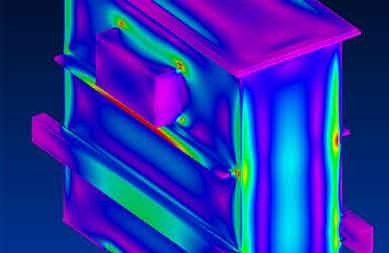
Figure 1: High-precision engineering review of 132kV class power transformer assemblies equipped with advanced vacuum and oil-immersed OLTC systems at EUROGULF.
Engineering Insights: Primary Failure Modes in OLTC Units
Field data from EUROGULF’s specialized service division reveals that OLTC degradation typically manifests through four primary failure mechanisms:
- Divertor Switch Contact Erosion: Repeated arcing during transition degrades copper-tungsten contacts, causing elevated contact resistance and thermal runaway.
- Dielectric Breakdown of Oil: Carbon particle suspension and moisture accumulation reduce oil dielectric breakdown voltage (BDV) below the mandatory 40 kV threshold (IEC 60156).
- Motor Drive Mechanism (MDU) Sticking: Mechanical gear train misalignment, brake shoe slip, or microswitch failure resulting in tap position out-of-step conditions.
- Transition Resistor Failure: Thermal cracking or burnout of transition resistors during slow switching operations, leading to phase-to-phase short circuits.
2. Comprehensive Engineering Workflows for OLTC Maintenance
Achieving maximum asset longevity requires a balanced combination of Routine Time-Based Maintenance (TBM) and advanced Condition-Based Monitoring (CBM). Modern electrical utilities and heavy industrial facilities must implement standardized inspection workflows to catch subtle dielectric and mechanical anomalies prior to critical failure.
2.1 Diagnostic Testing Techniques & Thresholds
Prior to opening the divertor compartment or initiating mechanical overhauls, engineers perform a series of non-destructive diagnostic measurements:
| Diagnostic Test | Standard Method | Acceptance Criteria / Threshold | Primary Failure Mode Detected |
|---|---|---|---|
| Dissolved Gas Analysis (DGA) | IEC 60599 / IEEE C57.104 | Acetylene ($C_2H_2$) < 20 ppm; Hydrogen ($H_2$) < 100 ppm | High-energy arcing, hot-spots, contact burning |
| Dynamic Contact Resistance (DCRT) | High-speed ripple recording | Smooth transition profile; No open-circuit contact bounce | Divertor contact bounce, mechanical timing slip |
| Oil Dielectric Breakdown (BDV) | IEC 60156 (2.5mm gap) | > 50 kV (New Oil) / > 40 kV (In-Service Oil) | Moisture contamination, carbon soot accumulation |
| Vibration / Acoustic Profiling | Piezoelectric sensors | Signature matching baseline envelope within ±5% | Selector contact wear, gear train binding |
| Acoustic Emission Partial Discharge | Ultra-High Frequency (UHF) | < 10 pC background discharge amplitude | Internal barrier tracking, gas bubble formation |
2.2 Step-by-Step Mechanical Overhaul Workflow
When an OLTC reaches its recommended switching cycle limit (typically every 50,000 to 100,000 operations depending on type) or shows elevated diagnostic indicators, a complete overhaul is mandatory:
- Isolation & De-Energization: Safely disconnect transformer, apply safety grounding, and verify complete discharge of residual static charge.
- Oil Drainage & Compartment Flushing: Drain insulating oil from the divertor switch compartment into dedicated storage tanks. Flush the compartment with filtered transformer oil to remove carbon sludge.
- Divertor Switch Insert Extraction: Carefully hoist the internal divertor switch mechanism using calibrated lifting gear, inspecting for mechanical distortion.
- Contact Thickness & Spring Tension Inspection: Measure fixed and moving contact burn-off dimensions using vernier calipers. Verify transition spring force meets original manufacturer specification (±5% tolerance).
- Transition Resistor Verification: Check resistance values across all phases using high-precision micro-ohmmeters to ensure zero open-loop drift.
- Vacuum Drying & Oil Refilling: Reinstall insert, seal main head gasket with fresh nitrile/viton seals, evacuate compartment to < 1 mbar pressure, and refill under vacuum with processed insulating oil.
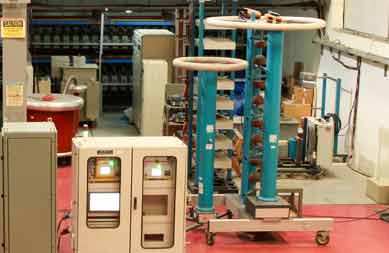
Figure 2: Routine and diagnostic electrical testing room at EUROGULF’s 100,000 sq ft facility in Sharjah, UAE, equipped with high-precision micro-ohmmeters and BDV testers.
Need Emergency OLTC Diagnostics or Factory Overhaul?
EUROGULF’s certified field engineers provide rapid site testing, dynamic contact resistance profiling, and full mechanical overhauls for all major OLTC brands across the Middle East and international markets.
Contact Us3. Product Recommendations: Power Transformers Designed for Minimal OLTC Maintenance
Preventative maintenance starts at the product selection phase. EUROGULF manufactures power transformers engineered to minimize maintenance frequency, optimize oil cleanliness, and resist harsh Middle Eastern climatic conditions.
132kV / 63MVA Power Transformers
Equipped with vacuum-type OLTC systems, sealed oil compartments, and automatic online DGA sensors. Ideal for utility sub-transmission networks requiring long maintenance intervals (up to 300,000 switching operations without contact replacement).
Special Application Industrial Transformers
Custom-built for furnace applications, mining, and heavy manufacturing featuring heavy-duty arc-switching OLTC designs, reinforced mechanical drive shafts, and forced-oil cooling systems (OFAF/ODAF).
Generator Step-Up (GSU) Transformers
Designed for power plants, integrating high-reliability motorized tap changers with continuous oil filtration systems (OFS) to actively strip moisture and particulate matter during active tap changes.
Compact Unit Substation Transformers
Robust ground-mounted and package substation units engineered with maintenance-friendly De-Energized Tap Changers (DETC) or compact vacuum OLTCs tailored for renewable solar grid interconnects.
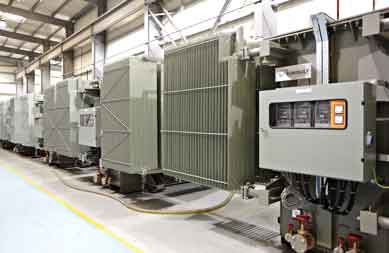
Power & Distribution Units
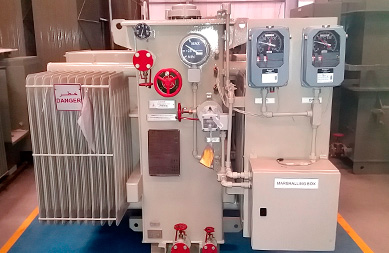
Special Application Units
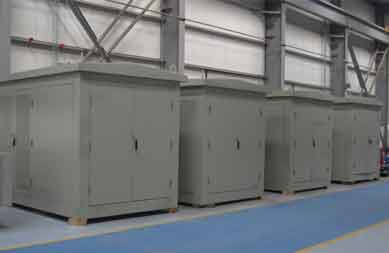
Package Unit Substations
4. Global Procurement Trends: Future-Proofing Transformer Maintenance Strategy
Global power utility procurement managers and industrial asset directors are shifting away from evaluating initial purchase price alone. Instead, procurement strategies focus heavily on Total Cost of Ownership (TCO), long-term maintainability, and asset longevity.
4.1 Shift Toward Vacuum Tap Switching Technology
Traditional oil-switching tap changers interrupt electric arcs directly inside the insulating mineral oil, creating carbon soot, dissolved gases, and contact erosion. Global procurement specifications now heavily favor Vacuum Interrupter OLTCs. In a vacuum switch, the electric arc is completely contained within hermetically sealed vacuum bottles. As a result:
- Insulating oil remains clean and carbon-free for hundreds of thousands of operations.
- Contact life is extended up to 300,000 switching operations.
- Maintenance intervals expand from 3-5 years out to 7-10 years, drastically lowering operational expenditure (OPEX).
4.2 Integration of Online Condition Monitoring (IoT Sensors)
Procurement tenders increasingly demand "Smart Transformer" capabilities natively integrated at the factory. Standard specifications require:
- Continuous Motor Current Profiling: Monitoring motor drive torque curves to detect gear wearing or mechanical jamming before a breakdown occurs.
- Online Moisture & DGA Sensors: Dedicated hydrogen and acetylene sensors fitted directly onto the tap changer compartment head.
- Fiber-Optic Temperature Sensors: Real-time monitoring of divertor contact temperature gradients to identify localized thermal hot-spots under peak loads.
5. Technological Advancements & Industry Trends in OLTC Engineering
The power transformer sector is undergoing rapid evolution driven by grid modernization, renewable integration, and environmental sustainability mandates.
5.1 Retrofitting & Modernization of Legacy Oil OLTCs
Replacing an entire power transformer due to an aging tap changer is economically impractical. A major industrial trend involves in-situ vacuum retrofits. Specialized retrofit kits allow utility operators to replace outdated oil-divertor inserts with modern vacuum interrupter inserts inside existing transformer oil tanks without modifying structural pipework or main transformer windings.
5.2 Eco-Friendly Synthetic & Natural Ester Dielectric Fluids
As utilities adopt biodegradable ester liquids (such as synthetic ester and natural vegetable oils) to satisfy environmental regulations and fire safety standards, OLTC manufacturers must adapt switching mechanisms. Ester fluids possess higher viscosity and different arc-quenching dynamics compared to mineral oil. Modern OLTC designs feature optimized flow channels and specialized contact materials certified for high-viscosity ester performance.
The EUROGULF Engineering Commitment
All EUROGULF power transformers are engineered in strict compliance with IEC 60214-1, IEEE C57.131, and BS standards. Our engineering team conducts full thermal, dielectric, and dynamic mechanical simulation modeling to guarantee that every installed OLTC operates flawlessly under desert ambient conditions exceeding +50°C.
6. Frequently Asked Questions (FAQ) for Global B2B Buyers
Below are authoritative technical responses to key questions commonly raised by electrical consultants, grid planners, and utility procurement officers.
Maintenance intervals depend on switching technology and operational frequency:
- Traditional Oil-Switching OLTCs: Inspection every 10,000 to 15,000 operations or every 1 to 2 years (whichever comes first), with a major overhaul at 50,000 operations.
- Vacuum-Switching OLTCs: Major maintenance intervals extend to 100,000–300,000 operations or every 6 to 10 years, requiring only periodic oil quality checks.
DGA measures trace gasses dissolved in the tap changer oil compartment. Elevated concentrations of Acetylene ($C_2H_2$) indicate high-energy electrical arcing, while high Ethylene ($C_2H_4$) and Methane ($CH_4$) point to severe thermal overheating of contacts or transition resistors. Early detection permits planned off-line inspection before phase-to-phase breakdown occurs.
Yes. EUROGULF offers direct replacement vacuum retrofit inserts designed to fit directly into existing OLTC housings without structural alterations to the main transformer tank. This upgrade eliminates oil carbonization and significantly reduces long-term maintenance costs.
Procurement teams should verify compliance with IEC 60214-1 and IEEE C57.131. Furthermore, transformers and tap-changer assemblies should be independently type-tested by internationally recognized laboratories such as KEMA (Netherlands) or CESI (Italy), verifying short-circuit withstand, temperature rise limits, and impulse voltage levels.
In high ambient regions like the GCC (where ambient temperatures frequently exceed 50°C), transformer top-oil temperatures can reach extreme levels. High operating temperatures accelerate oil oxidation, weaken mechanical drive springs, and increase contact resistance. EUROGULF custom-engineers transformer cooling radiators and OLTC thermal dissipation margins to compensate for severe ambient heat.
7. Corporate Capabilities: Why Industry Leaders Partner with EUROGULF Transformers
Founded in 1995 in Sharjah, UAE, EUROGULF Transformers has established itself as a premier manufacturer of power transformers, distribution units, package substations, and custom electrical solutions. Operating from a state-of-the-art 100,000 sq ft purpose-built manufacturing facility in Hamriyah Free Zone, EUROGULF combines advanced European design principles with localized regional support.

Figure 3: EUROGULF transformer designs are rigorously type-tested and certified by internationally renowned laboratories including KEMA (Netherlands) and CESI (Italy).
Key EUROGULF Operational Advantages:
- 132kV Design Capability: Proven engineering capability for power transformers up to 132kV class with sophisticated numerical simulation modeling.
- Type-Tested Excellence: Full design certification from globally accredited independent testing bodies—KEMA and CESI.
- Comprehensive Diagnostic Services: Full after-sales field support including dynamic contact resistance measurement, site oil dehydration, DGA analysis, and complete OLTC overhauls.
- ISO Integrated Quality Management: ISO 9001, ISO 14001, and ISO 45001 certified manufacturing facility ensuring strict quality control from raw material selection to factory acceptance testing (FAT).
- Turnkey Substation Solutions: End-to-end capabilities ranging from individual power transformers to fully integrated compact package substations.
Discuss Your OLTC Maintenance or Transformer Procurement Requirements
Our senior engineering consultants are available to provide technical support, custom design proposals, and site service quotes.
Contact Us