
1. Architectural Engineering & Operational Dynamics of Compact Package Substations
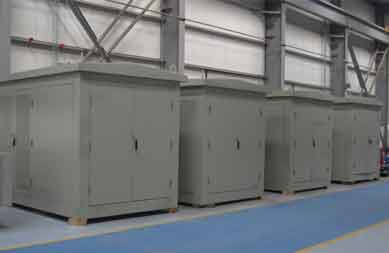
In modern electrical distribution networks, urban density, industrial expansion, and rapid renewable energy grid integration require compact, factory-prefabricated power transformation units. A Compact Package Substation (CSS)—also referred to as a Package Unit Substation (PUS) or Prefabricated Substation—is an integrated power transformation system manufactured and type-tested in strict compliance with IEC 62271-202 (and equivalent IEEE/NEMA standards).
Unlike legacy civil brick-and-mortar substations, which require extensive site design, civil construction, separate equipment procurement, and complex field wiring, a compact package substation integrates three core electrical compartments into a single, factory-assembled enclosure:
- Medium Voltage (MV) Switchgear Compartment: Housing Ring Main Units (RMU), SF6 or gas-insulated/dry-air switchgear, circuit breakers, load break switches, and protective relays designed to manage grid step-down functionality from 11kV, 22kV, or 36kV systems.
- Distribution Transformer Compartment: Accommodating liquid-immersed (mineral oil or synthetic/natural ester fluid) or cast resin dry-type distribution transformers ranging from 250 kVA up to 3150 kVA, optimized for ultra-low losses and severe ambient thermal withstand.
- Low Voltage (LV) Switchboard Compartment: Custom-configured with main circuit breakers (ACB/MCCB), busbar systems, automatic mains failure (AMF) panels, power factor correction (PFC) capacitors, and smart metering devices for sub-distribution at 415V, 400V, or 230V.
Eliminating Field Risk Through Factory Pre-Commissioning
By standardizing the structural interface between the MV switchgear, transformer, and LV distribution panel inside a factory-controlled environment, EUROGULF eliminates common site integration issues such as busduct mismatch, cable bend radius violations, phase misalignment, and inadequate internal arc gas clearance.
Each complete package unit leaves our facility pre-wired, fully routine tested, and ready for immediate drop-in installation on a pre-cast concrete pad, reducing civil site commissioning timelines by over 75%.
Technical Insight: Enclosure Housing & Thermal Performance (Class 10 vs. Class 15)
Per IEC 62271-202, the thermal behavior of a prefabricated substation enclosure is categorized by its "Enclosure Class" (e.g., Class 5, 10, 15, 20). This class represents the maximum additional temperature rise (in Kelvin) introduced by the enclosure walls when the enclosed transformer is running under rated load.
In high ambient temperature regions such as the Middle East and North Africa (where ambient shade temperatures regularly reach 50°C), selecting a standard Class 20 housing causes premature insulation aging and severe transformer derating. EUROGULF engineers utilize custom double-skinned insulated aluminum-zinc alloys, GRP (Glass Reinforced Polyester), or prefabricated concrete enclosures engineered with high-efficiency natural ventilation paths and thermal radiation shields, achieving verified Class 10 thermal performance under peak solar loads.
2. EUROGULF Compact Package Substation Series & Specification Matrix
Tailored to meet the diverse operational demands of utility distribution networks, heavy industrial infrastructure, commercial complexes, and renewable energy installations, EUROGULF manufactures three primary CSS product configurations.
EcoGrid-CSS (Utility Series)
Compact ground-mounted prefabricated substation optimized for public utility networks, housing development projects, and smart city infrastructure.
- Voltage Class: Up to 24 kV
- Power Capacity: 250 kVA - 1600 kVA
- Transformer Type: Hermetically Sealed Oil
- Protection Rating: IP54 / IP23D
- Enclosure Material: GI Steel / GRP
SolarFlex-PSS (Renewable Step-up)
Engineered specifically for solar PV plants and battery energy storage systems (BESS), providing direct step-up transformation to grid MV voltage.
- Voltage Class: Up to 36 kV
- Power Capacity: 1000 kVA - 3150 kVA
- Transformer Type: Dual/Multi-Winding Ester
- Protection Rating: IP55 (Heavy Dust)
- Enclosure Material: C5-M Marine Coating
HeavyDuty-CSS (Industrial Severe Duty)
Designed for chemical processing plants, oil & gas refineries, mining operations, and marine ports requiring maximum short-circuit and arc safety.
- Voltage Class: Up to 36 kV
- Power Capacity: 500 kVA - 2500 kVA
- Transformer Type: Cast Resin Dry-Type / Oil
- Arc Safety: IAC AB 20kA 1s
- Enclosure Material: 316L Stainless / Concrete
Technical Specification Comparison Matrix
The table below outlines standard baseline parameters across our compact package substation portfolio. All designs can be fully customized by our engineering team to align with regional utility mandates (DEWA, ADDC, SEWA, AADC, KEPCO, Saudi Electricity Company, etc.).
| Technical Parameter | EcoGrid-CSS (Utility) | SolarFlex-PSS (Renewable) | HeavyDuty-CSS (Industrial) |
|---|---|---|---|
| Rated Primary Voltage (kV) | 11 kV / 13.8 kV / 22 kV | 30 kV / 33 kV / 36 kV | 11 kV / 22 kV / 33 kV |
| Rated Secondary Voltage (V) | 400 V / 415 V / 433 V | 600 V / 690 V / 800 V (Inverter Output) | 380 V / 400 V / 415 V / 690 V |
| Standard Power Ratings (kVA) | 500, 1000, 1250, 1500 kVA | 1600, 2000, 2500, 3150 kVA | 630, 1000, 1600, 2500 kVA |
| BIL (Lightning Impulse Withstand) | 75 kV / 95 kV / 125 kV | 170 kV / 200 kV | 95 kV / 125 kV / 170 kV |
| MV Switchgear Type | Gas-Insulated RMU (2+1, 3+1) | Extensible GIS / AIS Vacuum Breaker | Internal Arc Rated Drawout Air/Vacuum Switchgear |
| Internal Arc Classification (IAC) | IAC AB 16kA 1s | IAC AFL 20kA 1s | IAC AFLR 20kA 1s |
| Enclosure Protection Level | IP 54 (MV/LV), IP 23D (Transformer) | IP 55 Sealed Compartments | IP 54 / IP 65 Dust & Water Tight |
| Corrosion Resistance Class | ISO 12944 C4 (High Industrial) | ISO 12944 C5-M (Marine/Severe) | ISO 12944 C5-I / C5-M (Heavy Industrial) |
3. Future Global Procurement Trends for Compact Package Substations
Global procurement strategies for power distribution infrastructure are undergoing a paradigm shift driven by decarbonization targets, urban land scarcity, and the deployment of AI-powered predictive maintenance models. Engineering buyers must evaluate several emerging trends when drafting technical specifications:
A. Shift Toward SF6-Free Medium Voltage Switchgear
Sulfur hexafluoride (SF6) has historically been the standard insulating medium for MV ring main units inside compact substations due to its high dielectric strength. However, with a Global Warming Potential (GWP) 23,500 times higher than CO2, international regulations (such as the EU F-gas Directive revisions) are rapidly mandating the phase-out of SF6.
Forward-thinking buyers are specifying SF6-Free alternative MV switchgear—utilizing clean air, synthetic air, or solid insulated switchgear (SIS) combined with vacuum interrupters. EUROGULF package substations seamlessly integrate next-generation green RMUs without modifying total substation footprint dimensions.
B. Natural & Synthetic Ester Fluid Adoption (FR3)
Urban substations installed close to residential high-rises, hospitals, and environmentally fragile coastal areas are moving away from traditional mineral oil. Natural ester fluids derived from renewable plant oils offer significant advantages:
- K-Class High Fire Point (>300°C): Eliminates the risk of catastrophic transformer fire or explosion, allowing substations to be placed significantly closer to building envelopes.
- 100% Biodegradable: Non-toxic in water and soil, eliminating the requirement for complex, expensive secondary containment bunds in many municipalities.
- Extended Insulation Life: Ester fluids continuously absorb moisture from paper insulation, slowing thermal degradation and extending transformer operational lifespan by up to 20%.
C. Smart Grid & IoT Sensor Integration (Substation 4.0)
Modern B2B purchasers no longer view package substations as passive electromechanical assets. Modern package substations serve as intelligent nodes within SCADA networks. Essential smart integration features specified in modern RFQs include:
- Online Dissolved Gas Analysis (DGA) & Moisture Sensors: Continuous tracking of hydrogen, acetylene, and moisture levels in transformer fluid to detect incipient faults.
- Fiber Optic Winding Temperature Monitoring: Direct real-time measurement of hot-spot winding temperatures for safe dynamic overloading during peak grid demand.
- Wireless Thermal Imaging & Partial Discharge (PD) Detection: Continuous monitoring of MV cable terminations and LV busbar joints to prevent thermal runaways before trips occur.
- IEC 61850 Communication Gateways: Standardized protocol integration for seamless automated remote telecontrol and grid self-healing logic.
Custom Substation Specifications Required?
Our senior design engineers can assist with CAD drawings, single-line diagrams (SLD), and thermal calculation reports tailored to your project.
4. Why Global Procurement Leaders Specify EUROGULF Transformers
Selecting a package substation manufacturer requires full confidence in structural integrity, electrical safety, and long-term supply chain reliability. Headquartered in the United Arab Emirates, EUROGULF Transformers combines decades of regional field experience with rigorous international compliance.
State-of-the-Art 100,000 Sq Ft Purpose-Built Facility
Operating from our expansive 100,000 square foot manufacturing plant in Hamriyah Free Zone, Sharjah, UAE, EUROGULF maintains end-to-end control over core processing, transformer winding, vacuum drying, enclosure fabrication, powder coating, and final assembly.
Our facility is equipped with automated CNC sheet metal punch presses, laser cutting lines, automated transformer winding machines, and specialized vacuum oil impregnation chambers, ensuring precision manufacturing standards across every unit.
Independent Type-Test Certification: KEMA & CESI
True technical authority (E-E-A-T) is validated through independent third-party verification. EUROGULF transformer designs and package substation arrangements have been rigorously type-tested and certified by the world’s leading international testing authorities:
- KEMA Laboratories (Netherlands): Full short-circuit withstand, temperature rise, and impulse voltage verification testing.
- CESI (Italy): Independent structural, dielectric, and internal arc type testing per IEC standards.
Additionally, our operations strictly adhere to an Integrated Management System certified to ISO 9001 (Quality Management System), ISO 14001 (Environmental Management), and ISO 45001 (Occupational Health & Safety).
Comprehensive In-House High Voltage Test Laboratory
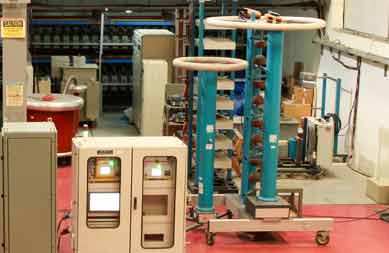
Every compact package substation manufactured at EUROGULF undergoes rigorous routine factory acceptance testing (FAT) before shipment. Our state-of-the-art laboratory is equipped with precision instrument transformers, digital power analyzers, high-voltage impulse generators, and partial discharge measurement equipment compliant with 132kV design class standards.
Customers and third-party inspectors (such as SGS, Bureau Veritas, or TÜV) are welcomed to witness FAT procedures either on-site at our Sharjah plant or remotely via live high-definition video streaming.

5. Compact Package Substations Procurement FAQ (Global Buyer Intent)
Below are answers to critical technical questions frequently raised by global procurement managers, EPC engineers, and utility consultants during the tender evaluation phase:
What is the primary architectural difference between a Compact Package Substation (CSS) and a conventional civil substation?
A Compact Package Substation (CSS) is a factory-assembled, type-tested enclosure compliant with IEC 62271-202 that integrates Medium Voltage (MV) switchgear, a distribution transformer, and Low Voltage (LV) switchboard into a single turnkey structure.
Unlike conventional civil brick-and-mortar substations, CSS units require minimal site civil work (only a level foundation pad), reduce spatial footprint by up to 70%, eliminate complex on-site inter-wiring, guarantee internal arc protection, and can be easily relocated if network demand shifts.
How does EUROGULF ensure Compact Package Substations withstand extreme ambient temperatures (up to 50°C)?
Operating in the Middle East has given EUROGULF specialized expertise in thermal management under extreme heat and solar radiation. We optimize thermal performance through:
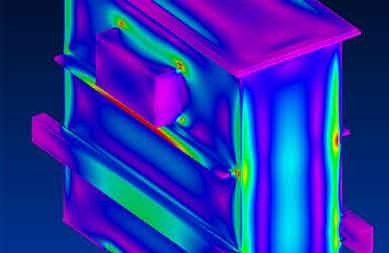
- Thermal Fluid Dynamics Simulation: Engineering the enclosure for low Enclosure Class performance (Class 10 per IEC 62271-202).
- Solar Radiation Deflection: Implementing double-roof sun-shield cover plates and reflective poly-urethane powder coatings.
- High Thermal Margin Transformer Insulation: Utilizing thermally upgraded paper (TUP) or Class F/H dry insulation rated for high ambient baseline temperatures without thermal degradation.
What arc resistance safety classifications (IAC) apply to EUROGULF package substations?
Safety is paramount in publicly accessible urban installations. EUROGULF package substations are type-tested for Internal Arc Classification (IAC AB or IAC AFLR) up to 20kA for 1 second in accordance with IEC 62271-202.
This classification certifies that if an internal electrical fault occurs within the MV switchgear or transformer compartment, special overpressure relief flaps direct hot gases and pressure downward or upward away from operators (A), general public (B), sides (F), and rear (R).
Can EUROGULF customize package unit substations for SF6-free switchgear and ester fluids?
Yes. EUROGULF offers fully customized eco-friendly package substations. We can integrate green MV Ring Main Units utilizing vacuum interruption in clean air or solid insulation, completely eliminating SF6 gas.
Furthermore, our liquid-immersed transformers can be filled with natural or synthetic ester fluids (such as Cargill FR3), providing high flash point safety (>300°C) and 100% environmental biodegradability.
What Factory Acceptance Testing (FAT) is performed prior to global dispatch?
Every unit undergoes stringent routine testing in our accredited high-voltage laboratory prior to packing. Routine FAT tests include:
- MV & LV power frequency voltage withstand tests.
- Lightning impulse withstand verification.
- Transformer ratio, vector group, phase balance, and winding resistance checks.
- No-load loss and load loss measurement at rated frequency.
- Mechanical operation and electrical interlock checks across all MV/LV switchgear doors and breakers.
- Paint dry film thickness (DFT) and enclosure IP seal integrity checks.
What is the typical lead time and shipping logistics for international orders from UAE?
Located in the Hamriyah Free Zone, Sharjah, UAE, EUROGULF benefits from direct access to major deep-water sea ports (Port Khalid, Jebel Ali Port) and international cargo airports.
Standard package substation production lead times range from 8 to 12 weeks depending on custom engineering requirements. Our logistics team handles international ocean freight, breakbulk packaging, export documentation, and customs clearing to serve projects across the Middle East, Africa, Asia, and global markets.
6. Partner with EUROGULF for Your Next Substation Deployment
Whether you are designing an urban power distribution network, developing a utility-scale solar farm, or upgrading an industrial facility, EUROGULF Transformers provides proven technical expertise, independent KEMA/CESI type-tested quality, and competitive manufacturing lead times.
Contact our specialized engineering sales team today to request CAD layouts, technical datasheets, single-line diagrams, or a commercial quote for your compact package substation requirements.