
Technical Articles & News

EUROGULF INSIGHTS & BLOG

Explore expert technical knowledge, engineering standards, industry trends, and innovations in power and distribution transformers.

Engineering Excellence

TRANSFORMER TECHNOLOGY & GUIDES

In-depth analysis of transformer maintenance, high-voltage laboratory testing, and energy efficiency solutions.

Global Energy Solutions

INDUSTRY UPDATES & HIGHLIGHTS

Stay informed with technical perspectives, product developments, and energy grid innovations from our specialists.

0%

Distribution Transformers sit at the final, highly visible stage of power delivery. They step medium-voltage electricity down for homes, factories, shops, and public facilities. For global buyers, choosing a type is not a simple catalog decision. Climate, load profile, installation space, maintenance capacity, and local grid conditions all matter. A unit beside a humid coastal road faces different demands from one inside a compact city substation.

The investment context is significant. The International Energy Agency’s Electricity Grids and Secure Energy Transitions report says the world may need to add or replace 80 million kilometres of grids by 2040. It also estimates annual grid investment must rise above USD 600 billion by 2030. These are grid-wide figures, not transformer sales forecasts, but they show the scale of modernization ahead. As IEA Executive Director Fatih Birol has put it, “There is no clean energy transition without grids.” Distribution equipment is part of that challenge.

This guide compares the main options buyers encounter: oil-immersed and dry-type units, pole-mounted and pad-mounted designs, and conventional and smart transformers. It considers where each type fits, what trade-offs deserve attention, and which specifications to verify before purchase. A lower purchase price can look attractive. It may not tell the whole story. Efficiency, cooling, noise, safety features, and service access affect performance over years of operation. Requirements also vary by project, so no single type is best everywhere. The distinctions are easy to overlook. The details matter.
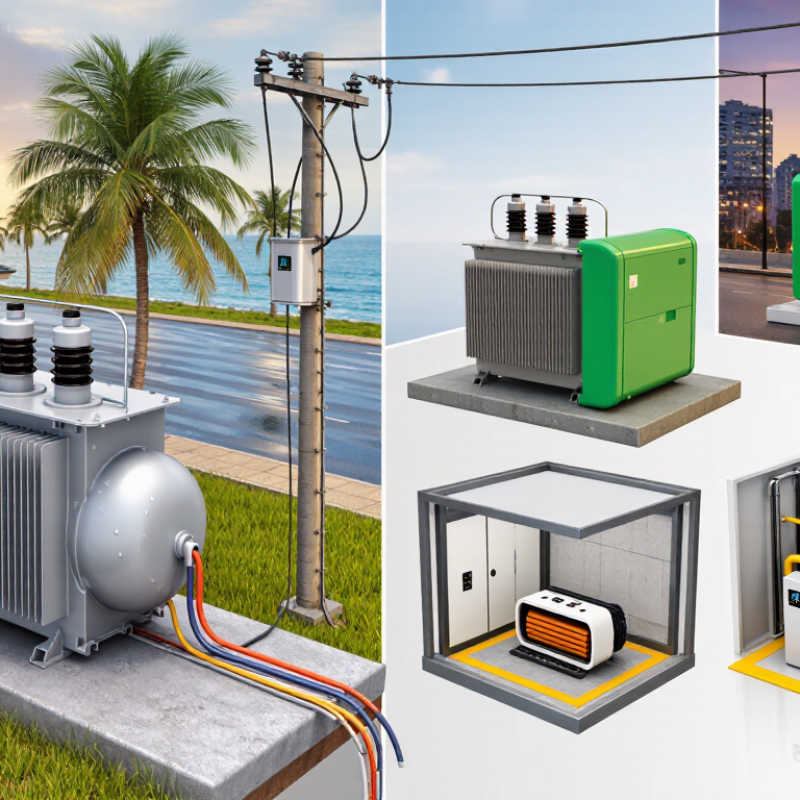
Top Types of Distribution Transformers for Global Buyers?

What Is a Distribution Transformer and Where Is It Used?

A distribution transformer is a static electrical device that reduces medium-voltage power to safer, usable voltage levels. It serves the final stage between a local grid and electricity consumers. Inside, copper windings and a magnetic core transfer energy without direct electrical contact. The transformer does not generate power.

These units are commonly installed near homes, offices, workshops, farms, and public facilities. Pole-mounted models serve scattered neighborhoods, while pad-mounted units supply underground networks. Commercial buildings often use three-phase transformers for lighting, elevators, cooling systems, and equipment. Small rural sites may need single-phase units with simpler load patterns.

Selection depends on voltage, load capacity, frequency, installation space, and local climate. Oil-immersed transformers often suit outdoor substations because the liquid supports insulation and cooling. Dry-type transformers can fit indoor electrical rooms where fire protection and maintenance access matter. Humidity, dust, salt air, and high temperatures can change the practical choice. I have seen specifications look correct on paper, yet poor ventilation caused avoidable overheating. That detail deserves attention. Buyers should also verify efficiency requirements, noise limits, protection devices, testing records, and applicable electrical standards. A lower purchase price may become expensive when installation or servicing is overlooked.

How Do Single-Phase and Three-Phase Transformers Differ?

Single-phase and three-phase distribution transformers serve different electrical realities. A single-phase transformer suits homes, small shops, lighting circuits, and modest rural loads. It usually has simpler installation and lower purchase costs. During a site inspection, I often see one feeding a compact workshop with several lights, sockets, and a small pump. Its design is easier to understand, but capacity can become limited as equipment grows.

Three-phase transformers support factories, commercial buildings, data facilities, and large pumping systems. They deliver power more evenly across three conductors. Motors start more smoothly, and heavy equipment usually operates with better balance. A three-phase unit can also reduce conductor material for the same power demand. However, installation requires careful phase sequencing, protection settings, grounding, and load distribution. A wiring error can create costly downtime.

Global buyers should compare rated power, primary and secondary voltage, frequency, insulation level, cooling method, and local certification requirements. Outdoor units may need sealed enclosures and corrosion protection, especially near salty air or heavy rain. Noise limits may matter near homes. Harmonic-producing equipment also deserves attention. A standard selection may look correct on paper, yet perform poorly on site. That assumption can fail. Engineers should review measured demand, future expansion, short-circuit conditions, and maintenance access before ordering. A smaller single-phase unit may be practical today, while a three-phase transformer may better support tomorrow’s uncertain load.

Which Transformer Types Use Oil or Dry-Type Insulation?

Global buyers usually choose between oil-immersed and dry-type distribution transformers. The insulation decision affects safety, cooling, maintenance, and installation cost. The IEA’s Electricity 2024 report projects global electricity demand to grow by about 3.4% annually through 2026. More load makes transformer selection less forgiving.

Oil-immersed transformers use mineral oil or biodegradable ester fluid for insulation and heat transfer. They suit outdoor substations, utility networks, and higher-capacity applications. Their tanks provide effective cooling, while sealed designs limit moisture entry. However, buyers must assess fire protection, fluid containment, leak monitoring, and local environmental rules. Field experience shows that poor ventilation around radiators can still create thermal stress. That detail is easy to miss.

Dry-type transformers use air or solid resin insulation. They are common in hospitals, commercial buildings, tunnels, and factories where indoor fire risk matters. They usually need less fluid-related maintenance, but dust, humidity, altitude, and restricted airflow can reduce performance. IEC 60076-11 addresses dry-type transformer requirements, while IEC 60076 provides broader transformer guidance. The U.S. Department of Energy’s 2024 distribution-transformer rule estimates energy savings of roughly 3.6 quadrillion British thermal units over 30 years. Efficiency matters beyond purchase price. Yet, choosing dry-type only for safety can be simplistic; sound levels, overload patterns, harmonics, and available space also influence lifetime results. Some projects still underestimate those operating conditions.

How Do Pole-Mounted, Pad-Mounted, and Substation Units Compare?

Top Types of Distribution Transformers for Global Buyers?

How Do Pole-Mounted, Pad-Mounted, and Substation Units Compare?

Pole-mounted transformers suit rural feeders, scattered homes, and low-density commercial loads. They use existing utility poles and require limited ground space. Installation is often quicker, but access needs bucket trucks and trained line crews. Exposure to wind, lightning, salt, and falling branches remains a practical concern. A small pole unit may serve one property, while larger banks support several customers.

Pad-mounted transformers fit residential developments, campuses, and urban extensions. Their locked, ground-level enclosures simplify visual inspection and underground-cable connections. They also reduce overhead hazards. However, buyers must reserve a firm, dry concrete pad and protect it from vehicles, flooding, and landscaping. The comparison is not perfectly clean. A pad-mounted design may cost more initially, yet reduce future pole work and improve site appearance.

Substation transformers handle higher capacities and connect distribution networks to transmission or industrial systems. They need fenced compounds, fire protection, lifting access, and carefully designed grounding. Noise can also affect nearby communities. The International Energy Agency’s Electricity Grids and Secure Energy Transitions report says annual grid investment must exceed USD 600 billion by 2030, nearly twice current levels. Efficiency deserves equal attention. A U.S. Department of Energy technical analysis estimates distribution-transformer losses represent about 2.5% of national electricity use. That figure makes no-load losses worth checking, not just purchase price. Buyers should compare voltage, impedance, cooling, insulation, climate exposure, maintenance access, and local standards. One assumption can fail. A compact site may still need substation-scale fault protection.

How Should Global Buyers Match Transformer Types to Local Requirements?

Top Types of Distribution Transformers for Global Buyers

Global buyers should match transformer design to the local grid, not to a catalog label. The IEA Electricity 2024 report expects global electricity demand to grow by about 3.2% annually from 2024 to 2026. That growth increases pressure on aging distribution networks. Start with voltage, frequency, phase balance, and peak load. A three-phase oil-immersed unit often suits outdoor substations and demanding industrial loads. A dry-type transformer may fit hospitals, offices, and tunnels where fire safety and indoor installation matter more.

Local conditions can change the choice quickly. In coastal areas, specify corrosion-resistant enclosures and sealed components. In hot regions, check temperature-rise performance and cooling margins. Dusty sites need stronger protection against blocked ventilation. Flood-prone locations may require elevated platforms or sealed pad-mounted designs. Pole-mounted transformers can reduce land use in rural networks, but access and storm resistance need careful review. Small details matter.

Use measured data, not assumptions. The U.S. Department of Energy’s 2024 efficiency rule estimates major long-term energy savings from improved distribution transformers. However, higher efficiency may increase initial cost and weight. That trade-off deserves a lifecycle calculation. A buyer should compare no-load losses, load losses, service access, spare parts, and local testing capability. Standards still need checking. IEC 60076 provides a useful technical foundation, but national codes may add stricter requirements. A perfect specification is unlikely. Recheck the design after a seasonal load study, because the first forecast may be wrong.

FAQS

When is a single-phase transformer the better choice?

It suits homes, small shops, lighting circuits, and modest rural loads. Installation is usually simpler. Costs may be lower. A compact workshop might power lights, sockets, and a small pump. Capacity can become limited when new equipment arrives.

When should buyers choose a three-phase transformer?

Three-phase units suit factories, commercial buildings, data facilities, and large pumping systems. They distribute power more evenly across three conductors. Motors usually start more smoothly. Heavy equipment can operate with better balance. The installation is more demanding.

What installation details matter for three-phase transformers?

Check phase sequencing, protection settings, grounding, and load distribution. A wiring mistake can cause expensive downtime. Review motor-starting conditions carefully. Do not trust the drawing alone. The site may disagree.

How do pole-mounted and pad-mounted transformers differ?

Pole-mounted units suit rural feeders and scattered properties. They use little ground space. Access may require trained line crews and lifting vehicles. Storms, lightning, salt, and falling branches remain concerns.Pad-mounted units connect well with underground cables. Their locked enclosures allow ground-level inspection. They need a firm, dry concrete base. Protect them from vehicles, flooding, and landscaping.

When are substation transformers necessary?

Substation transformers support higher capacities and larger distribution networks. They need fenced areas, fire protection, lifting access, and carefully designed grounding. Noise may affect nearby communities. Maintenance space is essential. A compact site may still require serious fault protection.

How should local climate affect transformer selection?

Coastal sites may need corrosion-resistant enclosures and sealed components. Hot regions require suitable temperature-rise performance and cooling margins. Dusty locations need protection against blocked ventilation. Flood-prone sites may need raised platforms. Small details matter.

Should buyers choose oil-immersed or dry-type transformers?

Oil-immersed units often suit outdoor substations and demanding industrial loads. Dry-type transformers can fit hospitals, offices, and tunnels. Indoor fire-safety requirements may influence the decision. Review cooling, insulation, enclosure design, and maintenance access. Neither option wins everywhere.

Which technical details should global buyers compare?

Compare rated power, primary and secondary voltage, frequency, phase balance, and impedance. Check insulation level, cooling method, noise limits, and enclosure protection. Review measured demand, future expansion, short-circuit conditions, and service access. Local certification requirements also matter. Catalog data is not enough.

How can buyers compare transformer cost fairly?

Include purchase price, installation, no-load losses, load losses, maintenance, and spare parts. A more efficient unit may cost more initially. It may also weigh more. Calculate the full operating life. The cheapest quote may age badly.

Conclusion

Distribution Transformers are essential for delivering electricity safely from medium-voltage networks to homes, commercial buildings, farms, and industrial facilities. They reduce voltage to usable levels and are available in single-phase and three-phase designs. Single-phase units are often suitable for small residential or lightly loaded applications, while three-phase transformers provide better efficiency and balanced power for larger buildings, industrial equipment, and commercial networks.

Buyers can also choose between oil-immersed and dry-type insulation, depending on installation conditions, maintenance preferences, fire-safety requirements, and environmental considerations. Pole-mounted transformers are commonly used in overhead distribution systems, whereas pad-mounted units support underground networks and offer a compact, secure installation. Substation transformers are designed for higher capacities and centralized power distribution. To select the right transformer, global buyers should evaluate voltage and frequency standards, load capacity, climate, space, installation method, efficiency requirements, local regulations, and long-term maintenance needs.

Isabella

Isabella

Isabella is a dedicated marketing professional with a profound understanding of our company's products and services. With a keen eye for detail and a passion for effective communication, she plays a vital role in showcasing the unique advantages of our offerings. Isabella frequently updates our......