
What Are the Top Compact Package Substations in 2026? This question reaches beyond brand rankings. It concerns safety, footprint, thermal performance, installation speed, and long-term serviceability. Compact Package Substations now support factories, renewable-energy sites, commercial buildings, transport hubs, and dense urban projects. Their steel enclosures may look similar, but internal design choices create important differences.
Power-distribution specialist Dr. Thomas A. Short has often emphasized, “A substation is successful only when it performs reliably in its actual environment.” That principle remains useful in 2026. A coastal installation needs corrosion resistance. A solar farm needs dependable protection under changing loads. An urban project may value low noise and minimal maintenance more than maximum capacity. The best choice is rarely the smallest unit on a catalogue page.
This guide examines leading Compact Package Substations through practical criteria. We consider transformer efficiency, switchgear configuration, ingress protection, cooling, monitoring, safety clearances, and factory testing. Real project conditions matter. Cable routes, soil conditions, emergency access, and future load growth can change the final decision.
Some comparisons remain imperfect. Manufacturers publish different test conditions, and not every performance claim is directly comparable. That deserves caution. A polished enclosure does not guarantee dependable operation. Engineers should verify standards, certifications, service support, spare-parts availability, and local installation requirements before purchasing. The strongest 2026 options combine compact construction with transparent documentation, proven field experience, and maintainable design. Reliability is not a feature added at the end. It begins with honest evaluation.
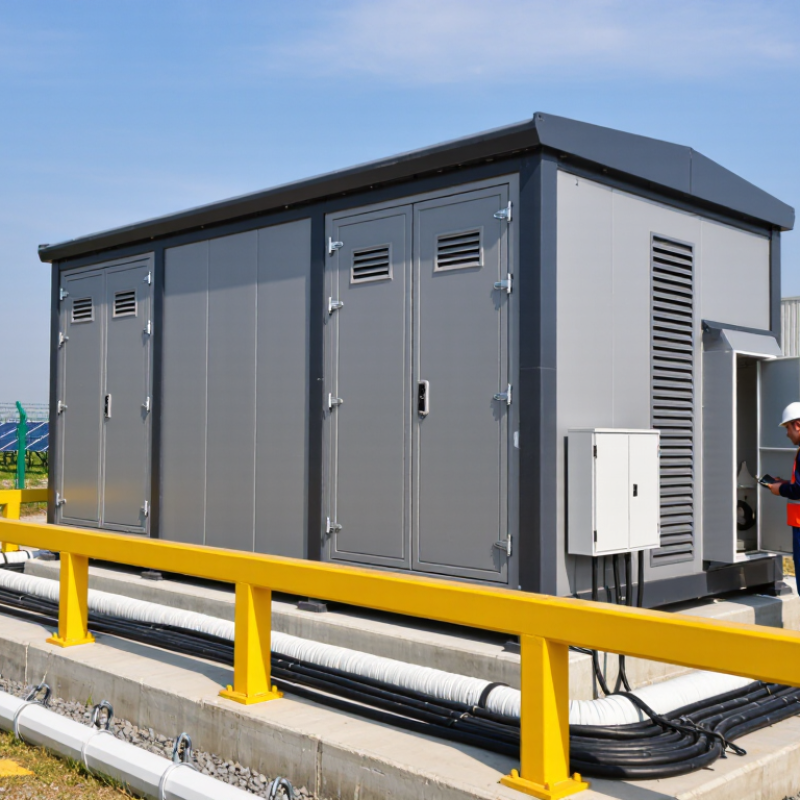
Define Compact Package Substations: IEC 62271-202 and Up to 36 kV
Compact package substations are factory-assembled units that combine medium-voltage switchgear, a transformer, and low-voltage equipment. Their enclosure may use steel, concrete, or another tested construction. The goal is clear: deliver a safer, faster installation with fewer site connections.
IEC 62271-202 defines requirements for high-voltage prefabricated substations. For many 2026 projects, “up to 36 kV” describes the medium-voltage class used in industrial plants, renewable facilities, and commercial networks. The standard addresses insulation, temperature rise, enclosure protection, earthing, mechanical strength, and resistance to internal faults. A credible evaluation should check test reports, rated voltage, short-circuit withstand, and service conditions. A polished brochure is not enough.
Good compact designs separate energized sections from accessible areas and provide practical cable access. Clear interlocking reduces switching errors. Adequate ventilation protects the transformer from heat buildup, especially in dusty or humid sites. Installation space matters too. A compact footprint can become a maintenance problem when doors cannot open fully. That detail is often missed. Engineers should also verify altitude, ambient temperature, fire separation, noise limits, and transformer capacity before comparing 2026 options. Some specifications still appear complete while leaving these assumptions unclear.
What Are the Top Compact Package Substations in 2026? - Define Compact Package Substations: IEC 62271-202 and Up to 36 kV
| Rank | Compact Package Substation Configuration | Typical MV Rated Voltage | Typical Transformer Arrangement | MV and LV Equipment | Typical Protection and Safety Features | Indicative Footprint | Best-Fit Applications | Relevant Technical Basis |
|---|---|---|---|---|---|---|---|---|
| 1 | Oil-Immersed Transformer with Air-Insulated MV Switchgear | 6–36 kV | Oil-immersed distribution transformer, commonly 100–2,500 kVA; natural air or oil cooling according to rating | Metal-enclosed air-insulated MV switchgear, load-break switch or circuit breaker, LV panel with incoming and outgoing feeders | MV fuses or overcurrent relays, transformer temperature indication, pressure relief, earthing switch, mechanical interlocks, enclosure ventilation | Approximately 8–30 m², depending on rating and compartment layout | Utility distribution, commercial buildings, industrial plants, logistics centers, and general-purpose networks | IEC 62271-202 for the prefabricated substation; associated switchgear, transformer, and LV equipment standards apply according to the selected equipment |
| 2 | Cast-Resin Transformer with Air-Insulated MV Switchgear | 6–36 kV | Dry-type cast-resin transformer, commonly 100–2,500 kVA; suitable for indoor or protected outdoor installation | Air-insulated MV switchgear with circuit breaker or fused switch, LV switchboard, metering, and power factor correction provisions where required | Temperature sensors, thermal trip functions, overcurrent and earth-fault protection, earthing switch, segregated compartments, and controlled ventilation | Approximately 10–35 m², generally larger than an equivalent oil-filled arrangement at the same rating | Hospitals, data facilities, public buildings, tunnels, underground installations, and locations with increased fire-safety requirements | IEC 62271-202 together with applicable requirements for dry-type transformers, MV switchgear, and LV assemblies |
| 3 | Oil-Immersed Transformer with Gas-Insulated MV Switchgear | 12–36 kV | Oil-immersed distribution transformer, commonly 250–2,500 kVA; compact tank and enclosure arrangement | Sealed gas-insulated MV switchgear, circuit breaker or load-break switch, cable compartments, LV distribution panel, and metering section | Overcurrent and earth-fault protection, transformer monitoring, gas-density monitoring where applicable, pressure relief, earthing switch, and access interlocks | Approximately 6–22 m², subject to cable bending space and transformer rating | Dense urban substations, coastal areas, industrial sites, rail infrastructure, and projects with limited installation space | IEC 62271-202 and applicable requirements for gas-insulated switchgear, distribution transformers, and LV assemblies |
| 4 | Concrete Enclosure Package Substation | 6–36 kV | Oil-immersed or cast-resin transformer, commonly 100–2,500 kVA, installed in a dedicated transformer compartment | MV switchgear, transformer compartment, LV switchboard, cable basement or cable entry zone, and optional remote-control equipment | Fire-resistant separation, forced or natural ventilation, earthing system, access control, internal arc classification where specified, and oil containment when required | Approximately 12–45 m², depending on transformer rating, service clearances, and compartment separation | Public distribution networks, residential developments, renewable-energy collection systems, and permanent outdoor installations | IEC 62271-202 type-tested prefabricated substation requirements, with project-specific civil, fire, earthing, and environmental provisions |
| 5 | Steel or Modular Enclosure Package Substation | 6–36 kV | Oil-immersed or dry-type transformer, commonly 100–1,600 kVA; modular construction supports factory assembly | Compact MV switchgear, LV panel, auxiliary distribution, remote terminal unit, and optional energy metering | Overcurrent and earth-fault protection, temperature monitoring, anti-condensation heaters, enclosure ventilation, earthing switch, and door interlocks | Approximately 7–28 m², with transport dimensions influencing the final layout | Fast-track industrial projects, temporary facilities, construction power, mining support systems, and relocatable substations | IEC 62271-202 with verification of enclosure strength, environmental performance, temperature rise, dielectric withstand, and protection against ingress |
| 6 | Renewable-Energy Collector Package Substation | 10–36 kV | Step-up transformer, commonly 500–3,150 kVA per unit, selected for inverter or generator output and collection voltage | MV collector switchgear, transformer feeder, LV auxiliary panel, revenue metering interface, communications, and optional protection automation | Overcurrent, earth-fault, under/over-voltage, under/over-frequency, anti-islanding functions where required, surge protection, and remote tripping | Approximately 12–40 m², excluding separate inverter or battery equipment | Solar photovoltaic plants, wind farms, battery energy storage sites, and distributed generation facilities | IEC 62271-202 for the prefabricated enclosure, supplemented by grid-code, protection-coordination, transformer, and power-conversion requirements |
| 7 | Underground or Semi-Underground Compact Substation | 6–24 kV, with selected designs up to 36 kV | Oil-immersed or dry-type transformer, commonly 100–1,000 kVA, subject to ventilation and access limitations | Compact MV switchgear, LV distribution board, cable compartments, drainage provisions, and remote monitoring where required | Water-ingress protection, drainage or sump system, temperature monitoring, overcurrent and earth-fault protection, gas detection where applicable, and controlled access | Approximately 8–25 m², with additional volume required for ventilation and maintenance access | Urban centers, pedestrian areas, airports, rail corridors, landscaped developments, and sites with strict visual-impact limits | IEC 62271-202 plus project-specific requirements for water protection, ventilation, fire safety, structural loading, and maintenance access |
FAQS
Many designs combine 10–36 kV medium-voltage equipment with 0.4 kV low-voltage distribution. A 10 kV unit is usually smaller. A 36 kV unit supports longer feeders but needs greater clearances.
They suit factories, solar sites, commercial buildings, apartment blocks, workshops, and temporary infrastructure. The 0.4 kV section supplies motors, lighting, control panels, and building loads. Site conditions still matter.
Check present demand, short-circuit withstand, and planned expansion. Capacities from 100 to 315 kVA suit smaller facilities. Units from 1,250 to 2,500 kVA support larger campuses and industrial loads.
Oil-immersed, naturally cooled designs can work well when space and fire controls permit. They often tolerate temporary overloads effectively. Temperature changes everything.
Cast-resin units can suit indoor or moisture-sensitive locations. They offer a useful balance between footprint, maintenance, and reliability. Humidity still requires careful enclosure protection.
No. Forced-air cooling helps control heat in hot climates and enclosed yards. Fans also add failure points, noise, and maintenance tasks. A passive system may be simpler.
Yes. The design must match either 50 Hz or 60 Hz operation. Frequency affects transformer losses, motor speed, heating, and protection settings. A mismatch can create expensive problems.
Dust, humidity, salt air, uneven foundations, altitude, and cable heating can reduce reliability. Tight cable bends also complicate maintenance. The enclosure may save space, but access can suffer.
Complete short-circuit studies and thermal calculations. Confirm ventilation, grounding, surge protection, interlocking, and separation between voltage compartments. The ranking is not absolute. Installation quality often decides the result.
Conclusion
Compact Package Substations combine medium-voltage switching, a distribution transformer, and low-voltage equipment in a coordinated, space-saving assembly. Under IEC 62271-202, these substations are designed for systems up to 36 kV. A 2026 comparison should consider common configurations with 10–36 kV medium-voltage inputs, 0.4 kV low-voltage outputs, and compatibility with 50 or 60 Hz networks.
Leading units can be assessed across capacities from 100 to 2,500 kVA, with particular attention to ambient-temperature limits and suitability for the installation site. Safety comparisons should include enclosure protection such as IP54 and rated fault withstand levels ranging from 12.5 to 25 kA. Efficiency is not determined by capacity alone: IEC 60076 transformer-loss data, monitoring capabilities, maintenance needs, and total cost over the service life all matter. The best choice balances electrical requirements, environmental conditions, safety, and operating economy.