
EUROGULF INSIGHTS & BLOG
Explore expert technical knowledge, engineering standards, industry trends, and innovations in power and distribution transformers.
TRANSFORMER TECHNOLOGY & GUIDES
In-depth analysis of transformer maintenance, high-voltage laboratory testing, and energy efficiency solutions.
INDUSTRY UPDATES & HIGHLIGHTS
Stay informed with technical perspectives, product developments, and energy grid innovations from our specialists.
China Top Generator Step Up Transformer Suppliers?
Table of Contents
- Generator Step-Up Transformers: Purpose and Operating Principles
- Key Design Features and Technical Specifications
- Overview of China’s Generator Step-Up Transformer Supplier Market
- How to Evaluate and Compare Chinese Transformer Suppliers
- Quality Standards, Testing, and Procurement Considerations
- FAQS
- Conclusion
- Related Posts
Choosing among China’s leading generator step-up transformer suppliers requires more than comparing price lists. A GSU transformer raises generator voltage for efficient transmission, while carrying demanding electrical and thermal loads. Small design choices matter. Winding insulation, cooling arrangements, bushings, and factory test records can shape long-term reliability.
A useful technical lens comes from Dr. S. V. Kulkarni, co-author of Transformer Engineering: Design, Technology, and Diagnostics. His published work connects transformer design with testing and diagnostics; that perspective encourages buyers to assess these areas together. It is not a substitute for reviewing a supplier’s actual records. Ask for evidence, not broad assurances.
This guide examines Chinese suppliers through practical questions: What voltage and capacity ranges do they support? Can they document routine and type testing? How clearly do they explain materials, losses, cooling, and service support? A polished brochure may show a transformer beside a spotless factory floor. Yet the more revealing details are often found in test reports, reference projects, and written responses to technical questions.
No single supplier suits every project. Compare specifications against the generator, grid connection, operating environment, and project requirements. Some details may remain unclear until a technical review. That is worth acknowledging. Careful qualification helps separate a capable manufacturer from one that simply presents well.
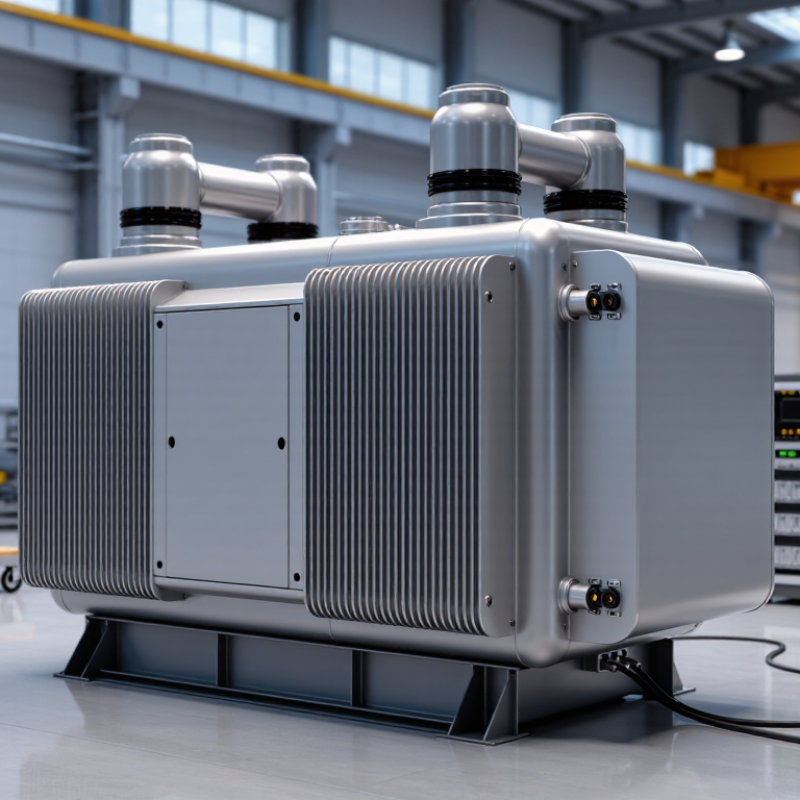
Generator Step-Up Transformers: Purpose and Operating Principles
A generator step-up transformer raises a power station’s output voltage before electricity enters transmission lines. The higher voltage lowers current for the same power transfer, reducing resistive losses along the route.
A critical link.
Inside the transformer, alternating current in the generator-side winding creates a changing magnetic field in the core. This induces voltage in the transmission-side winding, which has more turns. The voltage ratio follows the winding-turns ratio, subject to small losses. The transformer does not create power; some energy becomes heat.
Selection depends on generator voltage, rated output, cooling method, impedance, and the network’s insulation requirements. During operation, engineers monitor oil and winding temperatures, cooling equipment, and protective relays. A fault can produce intense mechanical stress, so protection settings and equipment ratings must match the installation.
The International Energy Agency’s 2023 report, Electricity Grids and Secure Energy Transitions, says annual grid investment needs to exceed $600 billion by 2030, nearly twice current levels. That wider expansion makes dependable grid equipment increasingly important. Yet a sizing assumption can still be wrong; actual load patterns and operating conditions deserve a careful review.
Key Design Features and Technical Specifications
A generator step-up transformer must match the generator’s output voltage to the transmission system. The nameplate rating should account for continuous output, ambient temperature, altitude, and expected operating conditions. Small assumptions matter. A unit sized only for average load may run hot during sustained peak generation.
Voltage ratio and winding configuration shape system compatibility. Engineers specify the high- and low-voltage ratings, frequency, phase arrangement, and vector group to manage voltage levels and phase relationships. Impedance affects fault current and voltage regulation. It deserves careful review, not guesswork. Cooling design, such as oil-immersed natural or forced cooling, should suit the site’s load profile and maintenance capacity.
Insulation level, temperature rise limits, and tap-changing requirements also belong in the specification. A tap changer may help manage voltage variation, but its operating range and switching method need to fit the grid connection. Include losses, sound limits, bushings, monitoring devices, and protection features in supplier comparisons. Factory tests can verify winding resistance, ratio, polarity, impedance, and dielectric performance. Not every project needs identical features. The uncomfortable part is that a technically complete sheet can still miss site realities, such as restricted access for replacement or cooling equipment. Review those details with the generator, grid, and transformer teams before final selection.
Overview of China’s Generator Step-Up Transformer Supplier Market
China’s generator step-up transformer supplier market serves power projects across thermal, hydro, wind, and solar generation. Suppliers differ in engineering capacity, voltage range, production schedules, and testing resources. A GSU transformer raises generator voltage for connection to the transmission network, so selection starts with the actual project conditions. Generator output, grid voltage, impedance, cooling method, insulation level, and site altitude all affect the specification. Small mismatches can create costly redesigns. Details matter.
A practical supplier review should look beyond catalogue ratings. Check whether the manufacturer can explain its design choices and provide relevant factory test records, including temperature-rise and loss results. Ask how it tracks key materials and manages inspection during production. Delivery planning matters too: large transformers may require route checks, lifting arrangements, and careful coordination at the site. A polished brochure is not proof of project fit. Paperwork can look tidy; field conditions are less tidy. Comparing suppliers against the same technical requirements makes proposals easier to evaluate, though no checklist replaces a clear review by qualified electrical engineers.
China Generator Step-Up Transformer Market: Grid Voltage Classes
China’s nominal AC transmission voltage classes include 110, 220, 330, 500, 750 and 1,000 kV. Generator step-up transformer high-side ratings are selected to match the project’s grid connection; this chart shows voltage classes, not supplier market shares or sales data.
How to Evaluate and Compare Chinese Transformer Suppliers
When comparing Chinese generator step-up transformer suppliers, start with the same technical specification for every quotation. Match rated MVA, voltage ratio, vector group, impedance, cooling method, temperature rise, and required efficiency. Check that each offer refers to IEC 60076 and includes routine and type-test records. A low price means little if the quoted design differs from your project requirements.
Capacity and delivery claims deserve careful checking. The IEA’s 2023 report, Electricity Grids and Secure Energy Transitions, says annual grid investment needs to rise above US$600 billion by 2030. This wider demand is a reason to verify production slots, key-component sourcing, and realistic shipment dates—not proof that any supplier is reliable. Ask for recent factory acceptance test records, traceable test equipment calibration, quality-system documentation, and references for comparable high-voltage units. I would not rely on a polished brochure alone; real factory evidence is more useful, though it can still leave questions.
Tips: Compare guaranteed losses, warranty terms, spare-parts support, and service response in one table. Request clarification in writing, especially where quotations use different assumptions. A short factory audit can reveal practical details, such as winding-shop capacity and how test failures are handled.
Quality Standards, Testing, and Procurement Considerations
When evaluating China-based generator step-up transformer suppliers, start with evidence, not brochure claims. Request quality-system documentation, material traceability, and sample inspection records. Confirm that the proposed design meets the project’s applicable IEC or IEEE requirements. The exact standard depends on the project specification. Review routine and type-test reports, including winding resistance, voltage ratio, impedance, insulation, and temperature-rise results. Check that test conditions match the required rating and cooling method. A polished report is not enough if its data cannot be linked to the offered unit.
Tips: Ask for a test schedule before placing the order. Confirm who witnesses factory tests and how failed results are handled. Compare drawings, nameplates, and packing plans against the approved specification. Details matter. Keep decisions in writing.
Procurement teams should also examine engineering support, production capacity, delivery milestones, and spare-parts availability. Visit the factory when practical, and assess how test equipment is calibrated and maintained. During review, look closely at details such as lead clearances, bushing interfaces, and transport restraints. These can affect installation later. Price comparisons can be misleading when scope, testing, or accessories differ. Some specification gaps are easy to overlook, even with experienced reviewers. That deserves a second look. Build time for document approval and independent inspection into the schedule, especially for large units with long manufacturing lead times.
China Top Generator Step Up Transformer Suppliers? - Quality Standards, Testing, and Procurement Considerations
Use this supplier-neutral scorecard to compare manufacturers of generator step-up (GSU) transformers. Requirements and acceptance criteria should be confirmed against the project specification, applicable grid rules, and the contract.
| Evaluation Dimension | Suggested Weight | What to Verify | Evidence to Request | Procurement Considerations |
|---|---|---|---|---|
| Standards and project compliance | 20% | Confirm the offered transformer’s ratings, insulation coordination, cooling method, impedance, vector group, frequency, tap range, and accessories against the approved project specification. Check the contractually applicable editions of IEC 60076 or the relevant national standard. | Clause-by-clause compliance schedule; guaranteed technical data sheet; deviations list; drawings showing terminal arrangement, clearances, and interfaces. | Identify the governing standard and edition in the inquiry documents. Resolve every deviation before award; do not treat a general statement of compliance as proof that all project requirements are met. |
| Design suitability for generator service | 15% | Review the generator and grid interface, expected operating range, loading profile, winding connection, neutral grounding, fault duties, harmonic conditions, and any required on-load tap changer (OLTC). | Design data; rating and connection diagrams; impedance and loss guarantees; thermal design information; confirmation of compatibility with the generator, switchgear, and grid connection. | Check that the proposed design reflects actual generator and system data, including fault levels and operating scenarios. Confirm responsibility for interface coordination and any required system studies. |
| Factory testing and acceptance | 20% | Agree routine, type, and special tests required by the contract and applicable standard. Typical routine checks include winding resistance, voltage ratio and phase displacement, short-circuit impedance and load loss, no-load loss and current, and dielectric tests. | Inspection and test plan (ITP); approved test procedures; calibrated-instrument records; signed factory test reports; customer-witness and hold-point schedule. | Define test scope, witness notice periods, acceptance limits, retest rules, and report format before production. Additional tests, such as temperature-rise, sound-level, or frequency-response measurements, should be specified when required by the project. |
| Short-circuit and insulation performance | 10% | Check that the design addresses specified short-circuit withstand duties and the required insulation levels for the system voltage and installation conditions. | Design calculations or supporting design evidence; dielectric-test records; declared insulation levels; short-circuit withstand evidence appropriate to the specified standard and design. | Clarify the basis and scope of any evidence, including whether it applies to the offered design. Confirm system fault levels, protection clearing times, and any project-specific insulation coordination requirements. |
| Manufacturing quality and traceability | 15% | Assess documented controls for materials, winding and core assembly, drying and oil processing, workmanship, non-conformities, and final inspection. | Quality-management certificates where relevant; manufacturing quality plan; material certificates; inspection records; serial-number traceability; non-conformance and corrective-action process. | Verify that certificates are current and cover the relevant manufacturing site and scope. Agree access to records, inspection rights, and control of subcontracted processes. |
| Delivery, logistics, and installation | 10% | Review the production schedule, transport dimensions and weight, shipping configuration, lifting points, preservation method, site access, and installation requirements. | Project schedule; outline and transport drawings; packing and preservation plan; lifting instructions; site assembly and commissioning requirements. | Confirm shipping route constraints, delivery terms, responsibility for transit insurance, storage limits, and the scope of site supervision or commissioning support. |
| Warranty, service, and spare parts | 10% | Evaluate warranty start and duration, response arrangements, technical support, spare-parts availability, and access to operation and maintenance information. | Draft warranty terms; service and escalation plan; recommended spare-parts list; manuals; maintenance schedule; training and commissioning scope. | Align warranty conditions with delivery, energization, and acceptance milestones. Specify response times, exclusions, remedies, and the procedure for investigating defects. |
| Commercial clarity and lifecycle cost | 10% | Compare base price and included scope alongside guaranteed no-load and load losses, accessories, testing, documentation, transport, and site services. | Itemized quotation; guaranteed losses and applicable evaluation method; payment milestones; delivery schedule; exclusions; change-order terms. | Evaluate total lifecycle cost using the project’s agreed loss-capitalization factors and operating assumptions. Compare offers on the same technical and commercial basis. |
Scoring method: Score each dimension from 0 to 5, where 0 means no acceptable evidence and 5 means fully evidenced compliance. Multiply each score by its suggested weight to calculate a weighted comparison. Standards commonly referenced for power-transformer projects include the IEC 60076 series; the applicable edition, national requirements, and any project-specific tests must be confirmed in the procurement specification. This scorecard is an evaluation aid, not a supplier ranking or certification.
FAQS
It raises generator voltage before electricity enters transmission lines. This helps reduce current and resistive losses.
Alternating current in one winding creates a changing magnetic field. The core transfers that field to another winding with more turns.
No. It changes voltage and current, but does not create power. Some energy becomes heat.
Check generator voltage, rated output, cooling method, impedance, and insulation needs. Actual load patterns matter too.
They monitor oil and winding temperatures, cooling equipment, and protective relays. A fault can create intense mechanical stress.
Give each supplier the same specification. Compare rated capacity, voltage ratio, winding arrangement, impedance, cooling, temperature rise, and efficiency.
Request factory test records, calibrated test equipment details, quality documents, and references for similar high-voltage units. A brochure is not enough.
Ask about production slots, key components, shipment dates, warranty terms, spare parts, and service response. Get unclear assumptions in writing.
It can show winding-shop capacity and how staff handle test failures. It helps, but it may not answer everything.
Conclusion
Generator Step-Up Transformers connect power generators to transmission networks by raising the generator’s output voltage, helping electricity travel efficiently over long distances. Their operating principles center on electromagnetic induction, while their design must account for voltage and power ratings, cooling methods, insulation, impedance, efficiency, and the demands of continuous operation. Selecting suitable equipment requires matching these characteristics to the generator, grid connection, site conditions, and project requirements.
China’s supplier market includes manufacturers with different product ranges, production capabilities, and service offerings. Buyers can compare suppliers by reviewing technical documentation, engineering experience, manufacturing capacity, delivery schedules, and after-sales support. Quality assurance is also essential: evaluate applicable standards, inspection procedures, routine and type testing, and clear acceptance criteria. A careful procurement process should confirm specifications, testing records, warranty terms, and responsibilities before placing an order, helping ensure the transformer is appropriate for the application and performs reliably over its service life.

Blog Tags: