
EUROGULF INSIGHTS & BLOG
Explore expert technical knowledge, engineering standards, industry trends, and innovations in power and distribution transformers.
TRANSFORMER TECHNOLOGY & GUIDES
In-depth analysis of transformer maintenance, high-voltage laboratory testing, and energy efficiency solutions.
INDUSTRY UPDATES & HIGHLIGHTS
Stay informed with technical perspectives, product developments, and energy grid innovations from our specialists.
How to Choose Power Transformers for Global Projects
Table of Contents
- Project Requirements and Transformer Selection Criteria
- Electrical Standards, Ratings, and System Compatibility
- Evaluating Transformer Designs for Climate and Site Conditions
- Comparing Efficiency, Reliability, Cost, and Lifecycle Performance
- Planning Certification, Logistics, Installation, and Maintenance for Global Use
- FAQS
- Conclusion
- Related Posts
Choosing Power Transformers for global projects requires more than comparing capacity, voltage, and price. A transformer that performs well in a dry inland substation may struggle in a coastal plant, a desert corridor, or a tropical city with frequent storms. Project teams must examine load profiles, harmonics, ambient temperature, altitude, cooling methods, insulation levels, transport routes, and local grid practices. Small assumptions become expensive problems.
Transformer specialist Martin J. Heathcote wrote, “The transformer is the heart of the electrical power system.” This principle gives the selection process practical weight. A failed unit can interrupt production, damage sensitive equipment, and create long replacement delays. Therefore, buyers should evaluate tested design data, proven suppliers, factory inspection procedures, spare-parts support, and service capability near the installation site. Certification alone is not enough. It should connect with real operating conditions.
The process also requires disciplined technical dialogue. Engineers should confirm impedance tolerance, tap-changer performance, short-circuit withstand, fire protection, noise limits, and efficiency under expected loads. A 100 MVA rating may look suitable, yet poor cooling margins can reduce dependable performance. That detail is easy to miss.
There is no perfect specification. Overdesign increases cost and transport difficulty, while underdesign limits future expansion. A careful decision balances present demand, climate exposure, maintenance access, grid stability, and ten-year growth. This guide explains how to compare Power Transformers with clearer evidence, fewer assumptions, and a healthier respect for uncertainty. Mistakes can happen. The goal is to make them visible before procurement begins.
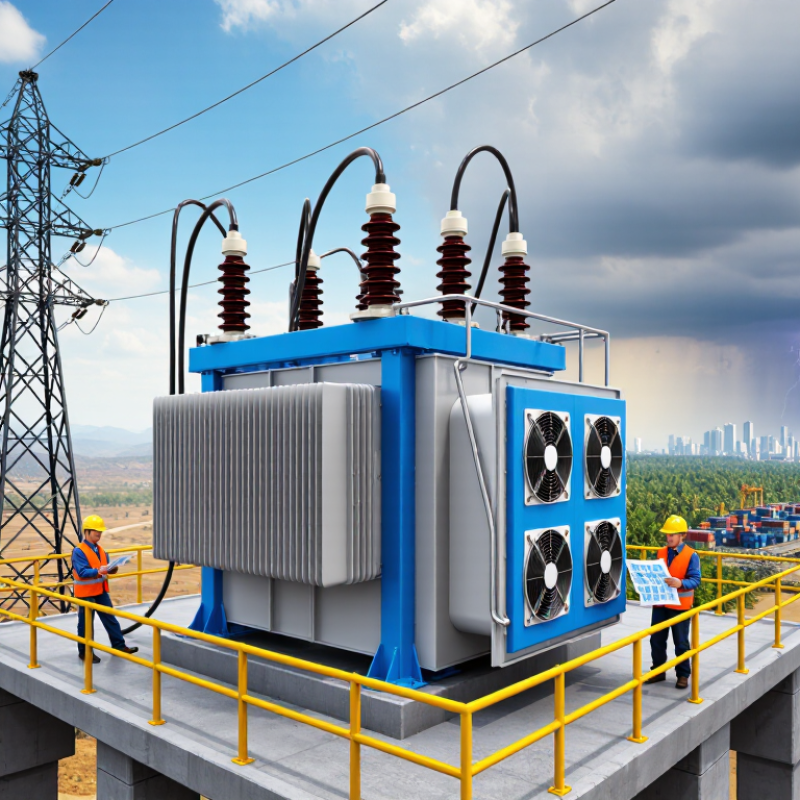
Project Requirements and Transformer Selection Criteria
Global transformer selection starts with project requirements, not catalog ratings. Define load growth, voltage levels, frequency, short-circuit duty, and network grounding. The transformer must also match ambient temperature, altitude, humidity, seismic exposure, and fire-safety rules. These details can change the design significantly.
The International Energy Agency reported in Electricity Grids and Secure Energy Transitions that annual grid investment must rise from about USD 300 billion to over USD 600 billion by 2030. This pressure makes reliable, efficient transformers increasingly important.
Engineers should assess losses across the full operating cycle, not only the purchase price. The U.S. Department of Energy also highlights distribution-transformer efficiency as a major energy-saving opportunity. Confirm applicable IEC 60076 requirements, local regulations, factory testing, transport limits, and spare-parts access before approval.
A practical specification should include continuous load, emergency loading, harmonics, cooling method, tap-changing needs, insulation levels, and protection settings.
Small details matter. Ask for certified test results, temperature-rise data, and impedance tolerances. Oil-filled units may suit outdoor substations, while dry-type units can simplify indoor fire-risk management.
However, climate and maintenance conditions may overturn that assumption. A spreadsheet can still miss customs delays, weak roads, or limited lifting equipment.
I have seen technically correct selections fail because the delivery route was never checked. Leave design margins, but avoid excessive oversizing, which can increase losses and reduce economic efficiency. Recheck every assumption.
Electrical Standards, Ratings, and System Compatibility
How to Choose Power Transformers for Global Projects
Electrical Standards, Ratings, and System Compatibility
Selecting a power transformer starts with the destination grid, not the equipment catalogue. Each country may apply different electrical standards, testing rules, and connection requirements. IEC standards often guide international projects, while local grid codes can add stricter conditions. Standards are not interchangeable.
Check the primary and secondary voltages, frequency, insulation level, and available fault current. A transformer rated for 60 Hz may require careful review before operating on a 50 Hz network. Confirm the vector group and phase displacement with the protection design. Grounding arrangements also matter, especially where neutral treatment differs between facilities. Small details matter.
Site conditions can change the rating. High altitude reduces cooling performance, while dust, salt, and humidity affect insulation and enclosure selection. Review ambient temperature, installation height, ventilation, noise limits, and fire protection requirements. I have seen projects delay delivery because a tap-changer range was assumed rather than verified. That mistake was avoidable. Document every assumption.
Load profiles deserve practical attention. Motors, furnaces, data equipment, and renewable inverters can create short-term overloads or harmonics. Request measured data when possible, not only estimated demand. Specify continuous capacity, emergency loading, impedance tolerance, and temperature rise clearly. A certified engineer should compare these values with local regulations and the utility’s interconnection study. I still recheck nameplate data against protection settings before approval. A correct rating on paper can remain incompatible with the complete system.
Evaluating Transformer Designs for Climate and Site Conditions
How to Choose Power Transformers for Global Projects
Evaluating Transformer Designs for Climate and Site Conditions
Global transformer selection starts with the site, not the nameplate. A 50 Hz design may still fail under extreme heat, altitude, dust, or flooding. The World Meteorological Organization reported that 2023 was approximately 1.45°C above the pre-industrial average. Heat matters. Engineers should verify ambient temperature, solar exposure, cooling capacity, and expected load cycles. IEC 60076-7 provides guidance for transformer loading and thermal ageing. Its principles help assess hot-spot temperature, insulation life, and emergency loading limits.
Climate data must connect with physical details. Coastal substations need protection against salt contamination and persistent humidity. Desert sites may require sealed enclosures, filtered ventilation, and wider cleaning intervals. At high elevations, reduced air density can affect cooling and external insulation performance. Flood-prone locations need raised foundations, drainage paths, and tested oil-containment measures. The International Energy Agency reported that global grids may require over 80 million kilometres of new or replaced lines by 2040. That scale increases the value of consistent, climate-specific transformer specifications.
A practical evaluation should compare normal loading, overload duration, short-circuit strength, noise, fire risk, and maintenance access. Do not guess. Use local weather records and site measurements. A design based only on average temperature can be misleading. Some projects also underestimate dust ingress and transport shock. That deserves reflection. IEEE C57.91 and IEC guidance support thermal calculations, but neither replaces field verification, independent testing, and a realistic commissioning plan.
| Site or Climate Condition | Typical Environmental Exposure | Main Transformer Risks | Recommended Design Features | Cooling and Rating Considerations | Required Site Data | Priority |
|---|---|---|---|---|---|---|
| Hot and Arid | High solar radiation, ambient temperatures commonly between 40°C and 50°C, low rainfall, airborne sand and dust. | Reduced cooling capability, accelerated insulation aging, blocked radiators, abrasive contamination and elevated oil temperature. | Specify the actual maximum design ambient temperature; use larger radiators, effective dust protection, sealed control cabinets, suitable gaskets and UV-resistant external coatings. | Check continuous rating at the site ambient rather than at a standard reference temperature. Consider forced-air cooling or a higher-rated transformer if required by the load profile. | Maximum and average ambient temperature, solar exposure, dust concentration, elevation, load cycle and prevailing wind conditions. | High |
| Hot and Humid or Tropical | High relative humidity, frequent rain, condensation, high wet-bulb temperature and possible biological growth. | Moisture ingress, reduced surface insulation performance, corrosion, deterioration of gaskets and contamination of control equipment. | Use weatherproof enclosures, anti-condensation heaters where appropriate, breather or sealed-tank arrangements, corrosion-resistant hardware, drainage and anti-fungal treatment for auxiliary equipment. | Evaluate cooling performance at high humidity and high wet-bulb temperature. Confirm that fans, pumps and control components are suitable for tropical service. | Temperature and humidity records, rainfall intensity, condensation risk, ventilation conditions, flood level and drainage requirements. | High |
| Cold or Arctic | Low ambient temperatures that may fall below −25°C, freeze-thaw cycles, snow and ice. | High oil viscosity, restricted oil circulation, brittle seals, reduced mechanical toughness and condensation during warming cycles. | Select low-temperature-compatible insulating liquid and materials, verify cold-start capability, specify suitable elastomers, provide space heaters where needed and design for snow and ice loads. | Confirm starting and loading limits at the minimum temperature. Review radiator valves, pumps, fans, tap-changer operation and control-cabinet heating. | Minimum temperature, duration of cold periods, snow and ice loads, wind chill exposure, heating-system availability and cold-start sequence. | High |
| High Altitude | Installation above approximately 1,000 m, with lower air density and often high solar radiation or large temperature swings. | Reduced air-cooling performance, lower external insulation withstand and possible derating of fans and bushings. | Apply the applicable altitude corrections to insulation clearances and cooling performance; consider larger radiators, forced cooling and altitude-rated auxiliary components. | Verify the continuous and emergency ratings at the actual elevation. Confirm fan airflow, temperature-rise limits, creepage distances and external dielectric clearances. | Elevation above sea level, atmospheric pressure, maximum and minimum temperature, humidity, pollution level and installation arrangement. | High |
| Coastal or Marine | Salt-laden air, high humidity, wind-driven rain and chloride exposure. | Corrosion of tanks, radiators, terminals and fasteners; salt deposits can increase leakage current and reduce external insulation performance. | Use a suitable corrosion-protection system, stainless or protected hardware, sealed cable entries, marine-grade coatings and increased creepage distance where pollution severity requires it. | Maintain cooling openings without allowing direct salt spray entry. Include inspection and washing provisions for exposed insulation surfaces. | Distance from coastline, airborne salt severity, wind direction, rainfall, coating category, maintenance access and pollution classification. | High |
| Industrial or Chemically Polluted | Conductive dust, chemical vapors, smoke, oil mist or gases from nearby industrial processes. | Surface tracking, corrosion, deterioration of insulation and premature failure of seals, relays and electronic controls. | Use an enclosure and coating system appropriate to the chemical environment, protected control cabinets, filtered ventilation and increased creepage or external insulation protection where required. | Prevent contaminated air from directly entering cooling paths. Establish cleaning intervals and verify compatibility of insulating materials with site chemicals. | Chemical composition, concentration, exposure duration, dust conductivity, ventilation pattern, cleaning method and pollution severity. | High |
| Heavy Rainfall or Flood-Prone | Intense rainfall, surface flooding, rising groundwater and water-saturated soil. | Water entry into cable boxes and control cabinets, loss of access, foundation settlement and contamination of insulating liquid. | Raise the transformer and accessories above the design flood level, provide sealed entries, positive drainage, appropriate bunding and a foundation designed for saturated soil conditions. | Ensure cooling equipment remains operational during heavy rain and that drainage does not obstruct radiator airflow or maintenance access. | Design flood level, rainfall intensity, drainage capacity, groundwater level, soil bearing capacity and emergency access route. | High |
| Seismic Region | Ground acceleration, vibration and possible differential movement between the transformer and connected equipment. | Tank or bushing damage, oil leakage, displacement, foundation failure and overstress of cable or bus connections. | Use site-specific seismic design, reinforced anchorage, flexible connections, restrained accessories and verified mechanical strength of the tank, radiators and bushings. | Check the seismic condition for the complete transformer assembly, including coolers, conservator, control cabinets and attached pipework. | Design spectral acceleration, soil class, fault distance, foundation design, equipment orientation and applicable local seismic code. | High |
| Urban or Residential Area | Limited space, strict noise limits, nearby buildings, restricted access and high public-safety requirements. | Noise nuisance, fire risk, difficult maintenance access and inadequate ventilation. | Consider low-noise core construction, acoustic barriers, fire-risk assessment, suitable enclosure classification, compact layout and safe oil containment or a dry-type configuration where appropriate. | Account for noise from the core, fans and pumps. Verify heat rejection, ventilation paths and reduced loading if acoustic measures restrict airflow. | Noise limit at property boundary, available footprint, fire regulations, ventilation routes, access width and maintenance clearances. | Medium–High |
| Remote or Weak-Grid Location | Limited spare parts, long logistics routes, unstable voltage or frequency and reduced specialist maintenance support. | Extended outage duration, incorrect tap-changer operation, poor monitoring and delayed repairs. | Use robust and maintainable construction, comprehensive condition monitoring, locally serviceable accessories, spare parts planning and clear emergency operating procedures. | Evaluate overload capability, voltage variation, harmonics and generator or renewable-energy operating modes. Provide reliable auxiliary power for cooling and monitoring. | Short-circuit level, voltage and frequency variation, load profile, logistics limits, repair strategy, spare-parts lead time and communications availability. | High |
Comparing Efficiency, Reliability, Cost, and Lifecycle Performance
Choosing a power transformer for a global project requires more than comparing purchase prices. Efficiency, reliability, cost, and lifecycle performance must be assessed together. The U.S. Department of Energy estimates transformer losses consume roughly 2–3% of generated electricity. Small efficiency gains can therefore produce significant savings over decades. Ask for tested no-load and load losses, not only nominal efficiency figures. The International Energy Agency’s Electricity 2024 report also highlights rising grid investment needs, increasing pressure on asset performance.
Reliability depends on the installation environment. A transformer near a dusty substation may need stronger sealing, easier inspection access, and better cooling margins. High altitude, tropical humidity, salt air, and frequent load changes can alter the design choice. In field reviews, maintenance access often matters more than expected. A technically excellent unit can still underperform when replacement parts require months to arrive. Specify condition monitoring, spare components, oil-testing procedures, and clear service responsibilities before procurement.
Purchase price is only one line in the budget. The European Commission’s Ecodesign work identifies transformer losses as a meaningful source of electricity consumption across Europe. Compare capital cost, energy losses, maintenance, outage exposure, disposal, and expected service life. A lower-loss design may recover its premium slowly, especially where electricity prices are low. That assumption can be wrong. Use local load profiles and realistic tariff forecasts. The ISO 55000 asset-management approach supports this lifecycle view, but it does not remove engineering judgment. Numbers help; site evidence decides.
Planning Certification, Logistics, Installation, and Maintenance for Global Use
How to Choose Power Transformers for Global Projects
Planning Certification, Logistics, Installation, and Maintenance for Global Use
A global transformer project begins with the destination, not the purchase order. Confirm the grid voltage, frequency, insulation level, ambient temperature, and local connection rules. Certification requirements may differ between countries. Request routine and type-test records that match the intended service conditions. Independent review can expose gaps before production starts. A certificate alone does not prove suitability.
Logistics need equal attention. Measure the transformer, crate, lifting points, and transport route before shipment. Bridges, tunnels, port cranes, and road limits can change the delivery plan. Use shock indicators and moisture protection during long ocean transit. If the unit contains insulating liquid, prepare approved handling and spill-control procedures. One project underestimated a narrow access road. The delay was avoidable.
Installation teams should check the foundation, earthing, clearances, cable connections, and oil condition. Record resistance, ratio, insulation, and protection-system tests during commissioning. Maintenance planning should include thermography, oil analysis, bushing inspections, and cooling-system checks. Keep critical spare parts near the site, not only in a distant warehouse. Digital monitoring can help, but it cannot replace field inspection. Conditions change. Review the maintenance interval after the first operating season.
FAQS
Define voltage, frequency, load, fault current, and grounding arrangement. Include future load growth and emergency loading. Small details matter.
Local grid rules may add stricter testing, connection, or protection requirements. International practices may not be interchangeable. Confirm them before approval.
It may require detailed engineering review. Check voltage, heating, flux density, insulation, and cooling performance. Never assume compatibility.
High altitude can reduce cooling performance. Dust, salt, humidity, heat, and seismic exposure affect insulation and enclosure choices. Inspect the actual site.
Request continuous demand, short-term overloads, motor starts, harmonics, and renewable inverter behavior. Measured data is better than rough estimates. Estimates can mislead.
Oil-filled units may suit outdoor substations. Dry-type units can simplify indoor fire-risk management. Climate, maintenance, ventilation, and safety rules may change the choice.
Tap range affects voltage control and system coordination. Confirm the required range instead of relying on assumptions. That mistake can delay delivery.
Request certified test results, temperature-rise data, impedance tolerances, and insulation details. Check nameplate values against protection settings. Recheck everything.
Review road strength, transport limits, customs timing, lifting equipment, and spare-parts access. A correct design can still fail during delivery. I have seen this happen.
Leave sensible design margins, but avoid excessive oversizing. It may increase losses and weaken economic efficiency. Bigger is not always better.
Conclusion
Selecting Power Transformers for global projects requires a structured assessment of technical, environmental, and commercial needs. Begin by defining the project’s voltage levels, load profile, capacity, frequency, fault conditions, expansion plans, and site-specific requirements. Confirm that the transformer complies with the applicable electrical standards and has suitable ratings for the local grid, protection systems, grounding method, and operating environment. Compatibility with regional infrastructure and utility requirements is essential for safe and reliable performance.
Climate and site conditions should also guide the design, including temperature, humidity, altitude, dust, salt exposure, seismic activity, and indoor or outdoor installation. Compare transformer options by energy efficiency, expected reliability, purchase price, maintenance needs, downtime risk, and total lifecycle cost rather than initial cost alone. Finally, plan certification, documentation, transportation, customs coordination, on-site installation, testing, spare parts, training, and long-term maintenance. A carefully coordinated selection process helps ensure dependable operation, regulatory readiness, and consistent performance across international locations.

Blog Tags: