
Choosing the China Best Special Application Transformers Manufacturer requires more than comparing catalog prices. It demands practical judgment, verified engineering data, and evidence from demanding installations. These transformers may serve railway systems, medical equipment, marine platforms, renewable-energy plants, or industrial furnaces. Each application creates different thermal, insulation, noise, protection, and reliability requirements.
Nikola Tesla, a foundational authority in alternating-current engineering, wrote, “The present system of electric distribution by alternating currents is the only one which can be used for the transmission of energy economically.” His observation remains relevant because modern Special Application Transformers must transfer power efficiently under unusual operating conditions. However, efficiency alone is not enough. A suitable manufacturer should demonstrate tested materials, controlled production, traceable components, and clear technical support.
Look closely.
A credible Chinese supplier should provide factory audits, routine test reports, temperature-rise records, and applicable certification documents. Engineers should also review winding design, cooling methods, short-circuit strength, partial-discharge performance, and enclosure protection. Site experience matters. A transformer that performs well in a clean factory may struggle in salt air, dust, vibration, or frequent load changes.
There is no perfect shortlist. Specifications can be incomplete, and marketing claims can sound stronger than field evidence. That is where careful questioning becomes valuable. This guide examines leading manufacturers through technical capability, customization experience, delivery consistency, after-sales response, and documented project performance. The strongest choice may not be the cheapest one. It should be the manufacturer that understands the application, admits its limits, and still delivers dependable Special Application Transformers.
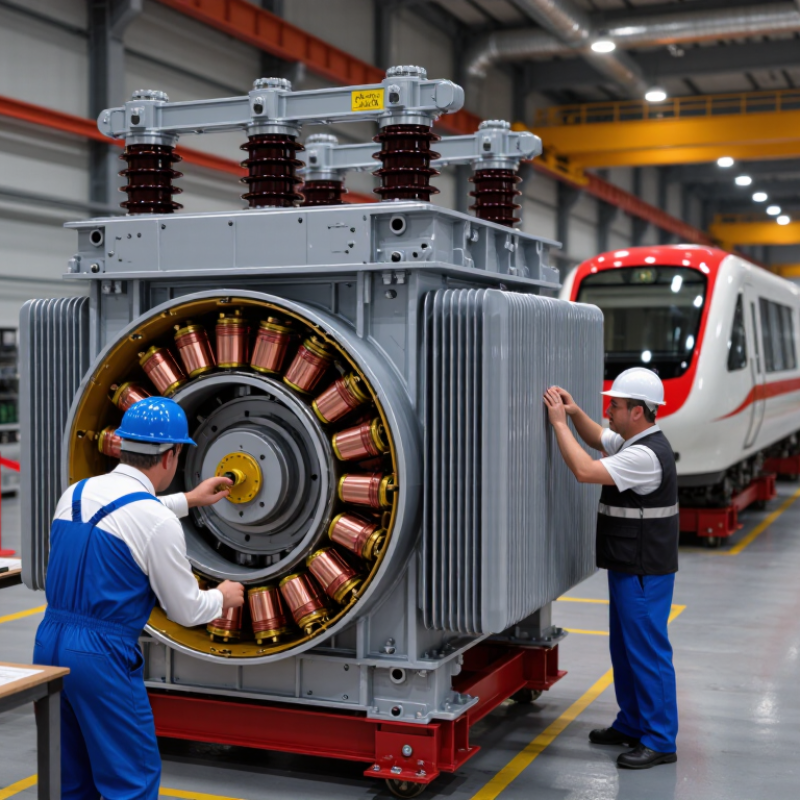
What Are Special Application Transformers?
Special application transformers are engineered for electrical duties that standard power units cannot handle reliably. They adapt voltage, frequency, waveform, insulation, cooling, and enclosure to a defined process. A furnace transformer faces repeated thermal shocks. A rectifier transformer manages harmonic currents and phase-shift requirements. Traction, mining, offshore, medical, and testing systems may require isolation, compact dimensions, or unusual impedance. The application comes first, not the catalog.
Engineering teams typically begin with load profiles, short-circuit levels, ambient temperature, altitude, duty cycle, and harmonic studies. They then verify losses, temperature rise, dielectric strength, noise, and partial discharge. IEC 60076 provides a core testing framework for power transformers, but special units often need additional factory and site tests. Practical experience matters here. A nameplate rating can look adequate while cyclic overloads age insulation quickly. Field reviews often expose this mistake.
Demand is becoming harder to ignore. The International Energy Agency reported that annual grid investment must exceed 600 billion dollars by 2030. That is nearly double current levels. More converters, renewables, storage, and industrial electrification increase demand for application-specific designs. The U.S. Department of Energy’s 2024 distribution transformer rule estimates 3.6 quadrillion Btu in energy savings over 30 years. Efficiency matters, but it is not the whole decision. Engineers should compare lifecycle losses, service access, spare strategy, and cooling performance. Sometimes the best design is still oversized. Sometimes it is not.
China Best Special Application Transformers Manufacturer? – What Are Special Application Transformers?
Special application transformers are designed or configured for specific electrical, environmental, safety, or industrial requirements that standard distribution transformers may not adequately address. Selection should be based on the load, voltage system, operating environment, applicable standards, and required protection features.
| Special Transformer Type | Primary Application | Typical Electrical Function | Common Configuration | Important Design Features | Typical Selection Considerations |
|---|---|---|---|---|---|
| Isolation Transformer | Medical facilities, laboratories, control systems, industrial equipment, and sensitive electronic loads | Provides electrical separation between the source and the connected load | Usually a 1:1 voltage ratio, with separate primary and secondary windings | Reduced direct conductive coupling, electrostatic shielding options, low leakage-current designs, and noise reduction features | Load type, leakage-current limits, insulation system, shielding requirements, and applicable safety standards |
| Furnace Transformer | Electric arc furnaces, resistance furnaces, induction furnaces, and other high-current heating systems | Steps voltage down to supply very high currents for heating equipment | Oil-immersed or dry-type construction; often designed for high short-time and continuous load duty | High short-circuit strength, robust winding support, enhanced cooling, and resistance to thermal cycling | Furnace duty cycle, secondary current, short-circuit conditions, harmonics, cooling method, and tap requirements |
| Rectifier Transformer | Electrochemical plants, traction systems, industrial drives, metal processing, and high-power DC supplies | Feeds a rectifier system that converts AC power into DC power | Single-phase or three-phase designs with suitable secondary phase-shift arrangements | Harmonic tolerance, phase-shifting capability, high insulation strength, and additional thermal margin | Rectifier circuit type, pulse number, DC output, harmonic spectrum, commutation effects, and load profile |
| Traction Transformer | Railway electrification, metro systems, locomotives, and rail substations | Supplies the voltage required by railway traction networks or onboard traction equipment | Outdoor oil-immersed or onboard compact designs, depending on the rail system | Mechanical vibration resistance, compact construction, high reliability, and compatibility with frequent load changes | Traction voltage, railway frequency, overload profile, installation space, vibration, fire safety, and environmental conditions |
| Grounding Transformer | Power systems without an accessible neutral point and networks requiring a defined grounding reference | Creates a neutral point and provides a path for zero-sequence current during earth faults | Zigzag or wye-delta connection; may include a neutral grounding resistor or reactor | Appropriate zero-sequence impedance, fault-current control, short-time thermal capability, and insulation coordination | System voltage, grounding method, allowable earth-fault current, fault duration, and relay-protection requirements |
| Scott-T Transformer | Supplying two-phase loads from a three-phase system, including certain traction and industrial applications | Converts three-phase power into two-phase power with a 90-degree phase relationship | Two specially connected single-phase windings forming a Scott connection | Balanced design, correct turns ratio, suitable insulation coordination, and careful phase-current management | Three-phase source voltage, two-phase load balance, power rating, phase relationship, and harmonic performance |
| Phase-Shifting Transformer | Power-flow control, parallel transmission paths, renewable-energy integration, and network congestion management | Changes the phase angle of voltage to control active-power flow between network sections | Usually includes series and exciting units with on-load tap-changing equipment | On-load tap changer, high short-circuit withstand capability, precise phase-angle control, and advanced protection | Power-flow range, system fault level, phase-shift range, tap-changer duty, and grid operating conditions |
| Converter Transformer | HVDC systems, large variable-speed drives, industrial converters, and high-power power-electronic systems | Provides controlled AC voltage and phase relationships for converter equipment | Multi-winding designs with valve-side windings and possible phase-shift arrangements | High harmonic withstand capability, reinforced insulation, controlled leakage reactance, and specialized cooling | Converter topology, pulse number, valve-side voltage, harmonic currents, transient stresses, and cooling requirements |
| Mining Transformer | Underground and surface mining equipment, mobile machinery, conveyors, pumps, and drilling systems | Supplies electrical power in demanding and frequently mobile mining environments | Compact dry-type or oil-immersed construction, sometimes with a protected enclosure | Mechanical ruggedness, high short-circuit strength, compact dimensions, flame-retardant options, and enhanced protection | Hazardous-area classification, mobility, dust and moisture exposure, cable length, shock loading, and grounding method |
| Marine Transformer | Ships, offshore platforms, ports, and marine electrical distribution systems | Provides voltage conversion and electrical isolation for marine power systems | Compact dry-type designs are common; oil-filled designs may be used in suitable protected locations | Corrosion resistance, vibration tolerance, low fire risk, compact dimensions, and marine-certified construction | Marine classification requirements, salt-laden atmosphere, vibration, space, weight, fire protection, and ventilation |
| Renewable-Energy Transformer | Solar photovoltaic plants, wind farms, battery storage systems, and hybrid energy installations | Connects inverter-based generation or storage equipment to medium- or high-voltage networks | Pad-mounted, skid-mounted, dry-type, or oil-immersed designs depending on site requirements | Inverter-duty insulation, harmonic tolerance, frequent load-cycle capability, low losses, and suitable impedance | Inverter output, harmonic content, bidirectional power flow, ambient temperature, overload profile, and grid code |
| High-Frequency Transformer | Switch-mode power supplies, electric vehicles, telecommunications equipment, and power-electronic converters | Transfers energy at frequencies higher than utility frequency while providing voltage conversion and isolation | Ferrite, nanocrystalline, or other high-frequency magnetic cores with compact windings | Low core loss, controlled parasitic capacitance, high insulation performance, and optimized winding layout | Operating frequency, switching waveform, power level, insulation voltage, thermal performance, and electromagnetic compatibility |
| Phase-Variable Transformer | Laboratory testing, motor starting, voltage regulation, and industrial process control | Provides adjustable output voltage for controlled testing or equipment operation | Variable autotransformer or regulated transformer with tap-changing equipment | Adjustable voltage, mechanical or electronic control, overload protection, and stable output regulation | Adjustment range, load type, regulation accuracy, starting current, duty cycle, and required isolation |
Note: The electrical ratings, cooling method, insulation level, enclosure, efficiency, and applicable standards must be specified for each project. Common reference standards include IEC 60076 and IEEE C57 series, while local grid, building, fire-safety, railway, marine, or hazardous-area requirements may also apply.
FAQS
It is designed for electrical duties that standard transformers may not handle reliably. The application comes first. Its voltage, cooling, insulation, waveform, and enclosure match a defined process.
Common uses include furnaces, rail systems, mining sites, offshore facilities, medical equipment, and testing systems. Each environment creates different electrical and mechanical demands. Heat and vibration matter.
A furnace transformer supplies low-voltage, high-current power. It must tolerate repeated thermal shocks and short-circuit stress. Cyclic overloads can age insulation quickly, even below the nameplate rating.
A rectifier transformer supports electrolysis, metal processing, and industrial drive systems. It manages harmonic currents and phase-shift requirements. A basic transformer may overheat in this service.
Provide the load profile, voltage, frequency, duty cycle, ambient temperature, altitude, and short-circuit level. Harmonic content is also important. Missing one detail can weaken the design.
Request ratio, insulation, temperature-rise, impulse, and partial-discharge tests when applicable. Ask for factory acceptance records and material traceability. Check the laboratory, not only the certificate.
Use a live video review of winding areas, calibrated instruments, and inspection records. Ask to see vacuum oil treatment for oil-filled units. Photos alone may hide problems.
Not necessarily. A low price may reflect thinner insulation, limited spare parts, or weak technical support. Compare lifecycle losses, cooling, delivery protection, service access, and warranty response.
No. Oversizing can increase purchase cost and operating losses. However, future converters, storage systems, and load growth may justify extra capacity. The correct margin is easy to underestimate.
A coastal site may need sealed, corrosion-resistant enclosures. An indoor data center may prefer dry-type construction for fire-safety reasons. A railway substation needs traction-focused protection and insulation. No design is perfect.
Conclusion
Special Application Transformers are engineered for demanding environments where standard transformer designs may not provide sufficient performance, safety, or flexibility. They are developed for specific applications such as renewable energy systems, rail transportation, industrial equipment, mining operations, marine facilities, and high-temperature or high-humidity locations. Depending on the operating requirements, these transformers may include customized voltage ratios, cooling systems, insulation structures, enclosure designs, noise controls, and protection features.
Chinese manufacturers design and produce these transformers through detailed technical communication, engineering evaluation, material selection, precision manufacturing, and strict quality control. Reliable production typically includes electrical testing, insulation checks, temperature-rise testing, load verification, and other inspections based on applicable international and industry standards. When selecting a Chinese manufacturer, buyers should evaluate technical expertise, production capacity, testing facilities, customization experience, quality management, delivery reliability, and after-sales support. A capable supplier should provide clear specifications, transparent documentation, consistent communication, and solutions that match the project’s operational and safety requirements.