Global Procurement Guide for 132kV Class Power Transformers: Specifications, Market Trends, & Vendor Evaluation
An exhaustive technical breakdown for EPC contractors, electrical utility engineers, and international procurement managers. Learn how short-circuit withstand capabilities, ester-based thermal optimization, and KEMA/CESI type testing govern modern sub-transmission grid reliability.
KEMA & CESI Type Tested
100,000 Sq Ft UAE Facility
IEC / IEEE / BS / NEMA Compliant
1. Engineering Overview of 132kV Class Power Transformers
In the architecture of modern electrical grid infrastructure, 132kV Class Power Transformers serve as the vital link between high-voltage bulk power transmission systems and regional distribution networks. Operating at a primary voltage rating of 132 kilovolts (kV), these transformers are critical step-down assets in electrical utility substations, or step-up assets (GSU) in renewable power generation hubs, thermal plants, and heavy industrial facilities such as steel mills, chemical plants, and mineral processing complexes.
Selecting and specifying a 132kV class power transformer requires deep evaluation of electromagnetic design, insulation coordination, thermal dissipation mechanisms, and mechanical stability under short-circuit conditions. Given the immense financial consequences of grid outages, international buyers must navigate complex procurement decisions with precise technical criteria.
Information Gain Insight for Procurement Officers
Unlike standard medium-voltage distribution transformers, a 132kV class power transformer is subject to extreme dielectric stress, high Basic Impulse Level (BIL) ratings (typically 550kV to 650kV peak), and severe electrodynamic forces during external system short-circuits. Specifying low-loss core steel, custom winding configurations, and dynamic On-Load Tap Changers (OLTC) directly influences the 30-to-40-year Total Cost of Ownership (TCO).
Key Application Configurations of 132kV Class Transformers
Depending on grid location and duty cycle, 132kV transformers are engineered into four main functional configurations:
Sub-Transmission Step-Down Transformers
Typically rated from 20MVA up to 100MVA, stepping down 132kV sub-transmission voltages to 33kV, 11kV, or 6.6kV for regional distribution network operators (DNOs) and industrial municipal feeds.
Generator Step-Up (GSU) Transformers
Engineered to connect utility-scale solar farms, wind power plants, or gas turbines directly to the 132kV grid. Designed to endure severe continuous loading, high harmonic content, and cyclic temperature variations.
Industrial Substation Transformers
Tailored for energy-intensive sectors (desalination plants, oil & gas refineries, smelters) with dynamic load swings, requiring robust short-circuit withstand capabilities and specialized vector groups (e.g., Dyn11, YNd11).
Grid-Interconnection Auto-Transformers
Utilized in transmission tie substations to link 132kV networks with higher voltage transmission systems (such as 220kV or 400kV grids), offering compact footprints and maximum electrical efficiency.
Technical Specification Matrix (132kV Power Class)
The following table outlines standard engineering benchmarks and custom manufacturing ranges available for global deployment:
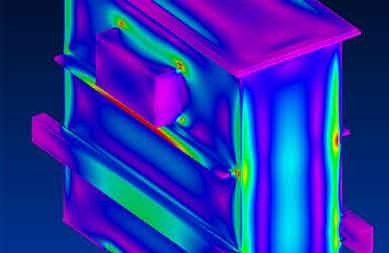
At EUROGULF Transformers, our design philosophy for 132kV class equipment centers on electromagnetic simulation precision, mechanical rigidity of core-and-coil assemblies, and thermal margin maximization. Each unit undergoes rigorous finite element method (FEM) modeling to minimize stray eddy-current losses in structural steel clamps and tank walls.
Sub-Transmission
132kV Substation Power Transformer
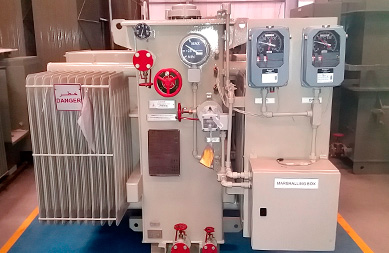
Fully customizable sub-transmission step-down transformers featuring low-loss step-lap core designs, high-grade mineral or synthetic ester fluid insulation, and advanced vacuum OLTC switches.
Engineered for solar PV substations, arc furnace duty, offshore platforms, and severe desert or saline environments. Reinforced short-circuit bracing and anti-corrosion C5-M coatings.
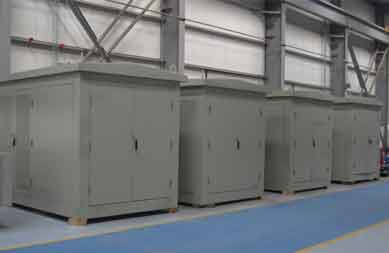
Turnkey integration of high-voltage step-down transformers with gas-insulated switchgear (GIS) or air-insulated switchgear (AIS) interfaces for space-constrained municipal projects.
3. Future Global Procurement Trends in 132kV Transformers
Global procurement strategies for high-voltage power transformers are undergoing a structural shift driven by clean energy transition mandates, supply chain realignments, and total life-cycle asset management. International procurement teams can no longer evaluate tenders based strictly on initial capital expenditure (CapEx).
Trend A: Total Cost of Ownership (TCO) & Loss Capitalization Formulas
Utilities and commercial buyers are increasingly applying aggressive loss capitalization factors during tender evaluation. No-load (core) losses and load (copper) losses are monetized over a 30-year operational horizon using the formula:
Evaluated Cost Formula = Bid Price + (A × No-Load Loss in kW) + (B × Load Loss in kW)
Where A represents the capitalized value of no-load loss ($/kW, often ranging from $4,000 to $10,000/kW) and B represents the capitalized value of load loss ($/kW, ranging from $1,500 to $4,000/kW). High-efficiency core designs incorporating Hi-B grade Cold-Rolled Grain-Oriented (CRGO) steel significantly lower the lifetime operational expenditure (OpEx).
Trend B: Rapid Adoption of Natural & Synthetic Ester Fluids
Driven by ESG compliance standards and stringent fire safety codes (especially in urban substations and environmental protection zones), procurement specs are shifting from traditional mineral oil to high-flashpoint ester dielectric liquids (K-class fluids). Synthetic and natural esters offer:
Fire Safety: Flash point > 300°C, eliminating the requirement for complex fire deluge wall systems in many substations.
Asset Life Extension: Superior moisture absorption capacity keeps cellulose paper insulation dry, extending solid insulation life by up to 200%.
Environmental Protection: Readily biodegradable (OECD 301), preventing soil and groundwater contamination in coastal or agricultural regions.
Trend C: Regionalization of High-Voltage Manufacturing Hubs
Global lead times for 132kV transformers produced in traditional European or East Asian facilities have stretched to 80–120 weeks due to raw material bottlenecks (grain-oriented electrical steel, copper conductor, specialized porcelain/composite bushings). Strategic procurement officers are increasingly sourcing from high-capacity, Middle Eastern manufacturing nodes like the UAE, which offer favorable shipping logistics to Africa, Europe, Asia, and the GCC.
4. Technological Innovations & Grid Modernization
As power distribution grids integrate variable renewable generation, reverse power flows, and smart grid automation, 132kV class power transformers are evolving from passive iron-and-copper hardware into intelligent, digitally monitored grid assets.
Integrated Online DGA & Fiber-Optic Monitoring
Modern 132kV units are supplied with multi-gas Dissolved Gas Analysis (DGA) sensors that track Hydrogen (H2), Acetylene (C2H2), Methane (CH4), and Carbon Monoxide (CO) levels in real time. Fiber-optic temperature probes embedded directly within the winding hot spots provide real-time thermal telemetry, enabling dynamic transformer overloading without accelerating paper degradation.
Dynamic Short-Circuit Stress Mitigation
Advanced finite element analysis (FEA) software allows transformer designers to map radial and axial electromagnetic forces under short-circuit conditions. Using pre-compressed high-density pressboard insulation rings and self-bonding transposed conductors (CTC), modern 132kV transformers achieve complete mechanical stability against severe asymmetrical short-circuit currents.
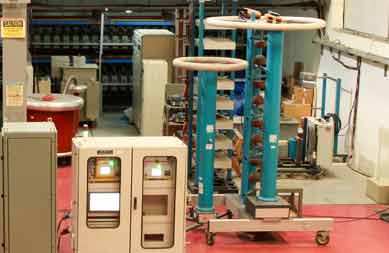
Figure 1: FEM Electromagnetic Winding Simulation and Precision Assembly at EUROGULF Facility.
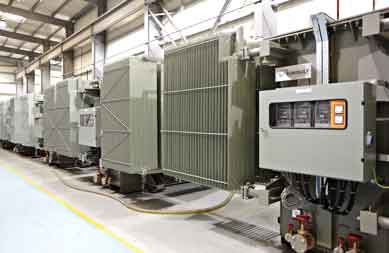
EUROGULF Transformers stands as a premier manufacturer of power transformers, distribution units, and substations in the Middle East. Operating from a state-of-the-art 100,000 sq ft purpose-built manufacturing facility located in the Hamriyah Free Zone, Sharjah, United Arab Emirates, EUROGULF brings over three decades of engineering expertise to global power utilities and EPC enterprises.
100,000 Sq Ft Plant
Equipped with climate-controlled clean winding rooms, automated oil treatment plants, vacuum drying ovens, and heavy overhead crane capacity for large-frame transformer assembly.
KEMA & CESI Type Tested
EUROGULF transformer designs have been independently type-tested and certified by international authorities including KEMA (Netherlands) and CESI (Italy), validating full short-circuit withstand capabilities.
High Voltage Test Lab
Our in-house high-voltage testing laboratory conducts full routine, type, and special tests calibrated precisely to IEC 60076, IEEE C57, BS, IS, and NEMA standards.
Quality Assurance & Standards Compliance
EUROGULF enforces an ISO 9001:2015, ISO 14001:2015, and ISO 45001:2018 certified Integrated Management System. Every 132kV class power transformer manufactured at our facility undergoes rigorous stage-by-stage quality checks:
Raw Material Auditing: 100% verification of electrolytic grade copper (>101% IACS conductivity) and laser-treated CRGO core steel laminations.
Vapour Phase Drying (VPD): Winding core assemblies are dried under deep vacuum to achieve insulation moisture levels below 0.5%, guaranteeing maximum dielectric strength.
Transformer Oil Degassing: High-vacuum oil filtration units ensure breakdown voltage (BDV) exceeds 70kV and moisture content remains under 10 ppm prior to tank sealing.
Below are authoritative answers to critical technical and commercial queries submitted by utility engineers, grid consultants, and international procurement specialists:
Short-circuit capability should be verified through third-party independent Type Test Certificates issued by recognized STL (Short-Circuit Testing Liaison) member laboratories such as KEMA, CESI, or CESI-FIPA. The test must confirm that the transformer withstood dynamic mechanical forces and thermal limits specified in IEC 60076-5 without physical deformation of windings, displacement of pressboard insulation, or dielectric degradation. EUROGULF holds valid type test credentials from both KEMA and CESI for its core transformer ratings.
Standard international practice under IEC 60076-3 specifies a lightning impulse withstand level (BIL) of 550kV or 650kV peak for 132kV system voltages, depending on system earthing (effectively earthed vs ungrounded), lightning frequency, and surge arrester protection schemes. For extreme lightning environments or ungrounded sub-transmission systems, a 650kV peak BIL rating with power frequency withstand voltage of 275kV RMS is recommended.
Standard IEC 60076 thermal ratings assume an ambient peak of +40°C and a daily average of +30°C. In hot desert climates where ambient temperatures reach +50°C with solar radiation loads, standard temperature rises (60K top oil / 65K winding) must be derated. Engineers must specify custom reduced temperature rises (e.g., 45K top oil / 50K winding rise) or scale up radiator surface areas and forced air cooling fans (ONAF/OFAF) to guarantee full rated MVA loading without exceeding the 98°C hot-spot thermal limit.
A comprehensive FAT for a 132kV power transformer must include: Winding Resistance, Voltage Ratio & Vector Group Check, Measurement of No-Load Loss & Current, Short-Circuit Impedance & Load Loss, Applied Voltage Test, Induced Overvoltage Test with Partial Discharge (PD) measurement (<100pC at 1.5Um/√3), Impulse Voltage Withstand Test (Full and Chopped Wave), Frequency Response Analysis (SFRA), and Dissolved Gas Analysis (DGA) before and after dielectric tests.
Vacuum OLTC technology quenches the electrical arc inside hermetically sealed vacuum interrupters, completely preventing arcing in the tap selector oil tank. This eliminates carbon contamination of dielectric oil, reduces contact wear, extends maintenance intervals from 50,000 operations to up to 300,000 operations, and significantly lowers lifecycle maintenance costs in grid-tie substations experiencing frequent voltage fluctuations.
While global European/Asian lead times currently range between 18 to 24 months, EUROGULF leverages optimized supply chains, flexible manufacturing schedules, and direct strategic access to raw materials in the UAE free zones to offer accelerated delivery schedules—often within 28 to 36 weeks from drawing approval, depending on technical specifications and factory loading.
Request Technical Specification & Product Catalog
Need comprehensive technical drawings, loss calculation tables, or tender specifications for your upcoming 132kV Class Power Transformer project? Our senior engineering team is ready to support your technical evaluation and custom quotation.